
Your septic system works silently beneath your property, managing wastewater day in and day out. But out of sight should never mean out of mind. Neglecting this vital, unseen engine can lead to catastrophic and costly failures, including raw sewage backups into your home, environmental contamination of your property, and staggering repair bills that can easily reach tens of thousands of dollars. Proper care is not just a suggestion; it is a critical component of responsible homeownership.
This guide provides a comprehensive roundup of actionable septic system maintenance tips specifically designed for homeowners, landlords, and property managers in communities like Lone Oak and the greater eastern Dallas area. By adopting these proactive strategies, you can extend your system’s lifespan by decades, prevent unexpected emergencies, and ensure your home’s plumbing runs smoothly and efficiently. We will move beyond generic advice to provide the specific details you need to implement these practices effectively.
Inside, you will find a clear breakdown of essential tasks, from understanding professional pumping and inspection schedules to simple, everyday habits that protect your drain field and plumbing. We will cover how to use water wisely, what products to keep out of your drains, and the warning signs that indicate it is time to call a professional. This list is your go-to resource for transforming septic system care from a mystery into a manageable routine, protecting your investment and giving you peace of mind.
1. Regular Septic Tank Pumping Every 3-5 Years
The single most important aspect of any septic system maintenance plan is having the tank professionally pumped on a consistent schedule. Your septic tank acts as a primary settling basin where solid waste sinks to the bottom, forming a sludge layer, while lighter materials like grease and oil float to the top, creating a scum layer. Bacteria in the tank work to break down organic solids, but inorganic materials and sludge accumulate over time. Professional pumping removes this buildup, preventing it from flowing into and clogging the drain field, which can cause catastrophic system failure.
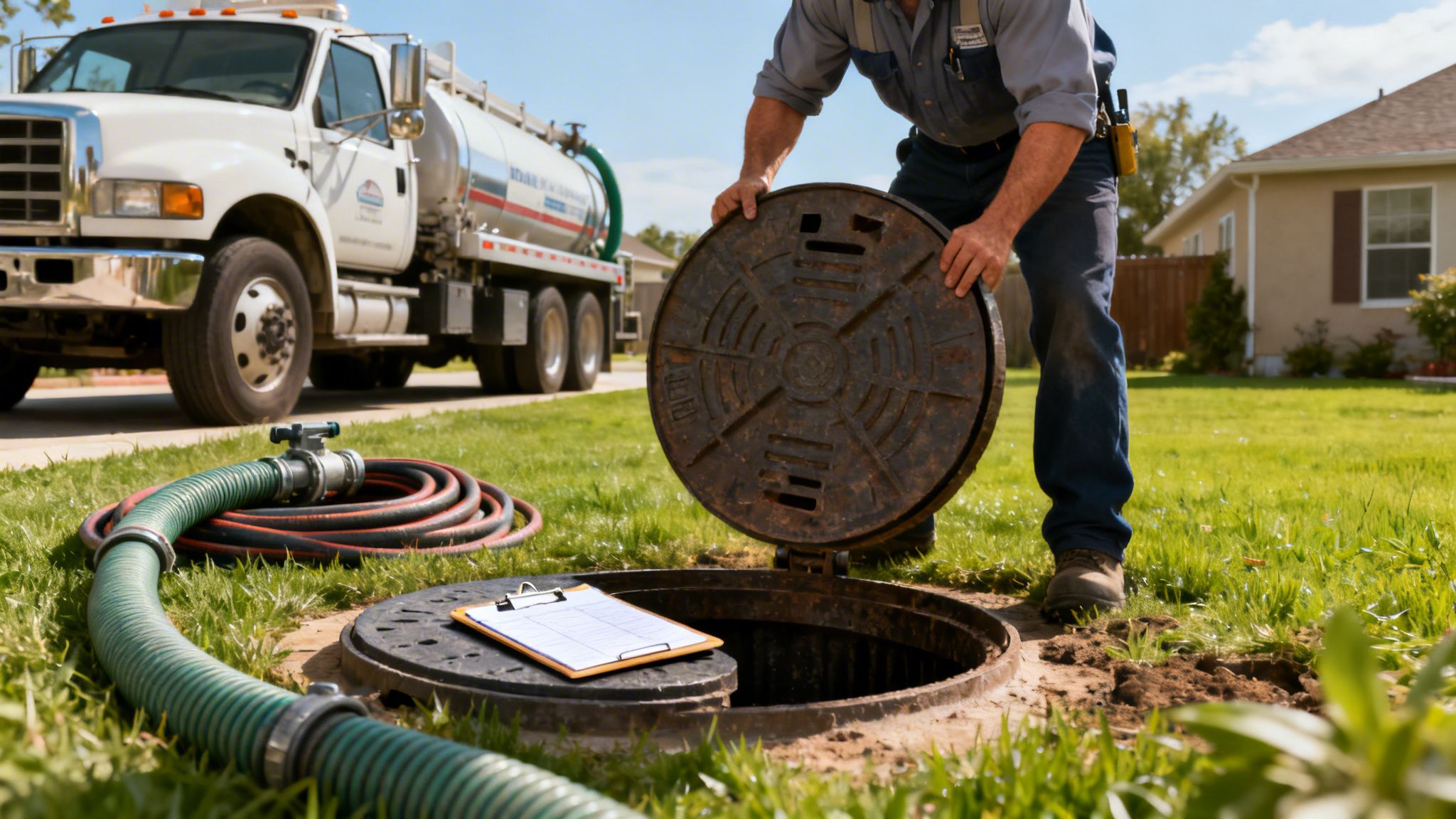
This preventative step is crucial because a clogged drain field cannot absorb wastewater, leading to sewage backups in your home or pooling in your yard. For homeowners, this is one of the most effective septic system maintenance tips for avoiding thousands of dollars in emergency repairs or complete system replacement.
Why Pumping Frequency Varies
A “one-size-fits-all” approach doesn’t work for pumping schedules. The standard 3-5 year interval is a general guideline, but your specific needs depend on several key factors:
- Household Size: A family of five will generate significantly more wastewater and solids than a household of two, requiring more frequent pumping. For larger families in the Lone Oak area, a 3-year schedule is often a safer bet.
- Tank Size: A smaller 1,000-gallon tank will fill up faster than a larger 1,500-gallon tank serving the same size household.
- Appliance Usage: The use of a garbage disposal can increase the solid waste entering your tank by up to 50%. If you use one frequently, you should plan to have your tank pumped at the shorter end of the recommended interval, possibly every 2-3 years.
Key Insight: Don’t just guess your pumping schedule. During your first professional service, ask the technician to measure the sludge and scum layers. This data provides a baseline to create a customized and cost-effective maintenance schedule tailored to your household’s actual usage.
Actionable Pumping Tips
To make the process smoother and more effective, follow these best practices:
- Keep Meticulous Records: Create a dedicated file for your septic system. Record the date of each pumping, the name of the service provider, and any notes from the technician, such as the measured sludge levels.
- Mark Your Tank’s Location: If you don’t already have risers installed, clearly mark the location of your septic tank lids with a flag or decorative landscape stone. This saves time and potential digging fees for the service crew.
- Schedule Off-Season: Book your pumping service for late fall or early spring. Plumbing companies are often busiest in the summer, and you can avoid emergency rates and scheduling delays.
- Get Professional Quotes: When it’s time for service, contact a licensed and insured professional. For homeowners in eastern Dallas and Hunt County, a reputable company like On The Way Plumbing can provide a clear quote and perform the service correctly.
2. Monitor Water Usage and Identify Leaks Early
Beyond what you flush, the sheer volume of water entering your septic system dramatically impacts its health and longevity. Your septic tank is designed to hold wastewater for a specific period, allowing solids to settle and bacteria to begin treatment. Constant, excessive water flow from leaks disrupts this crucial process, overwhelming the tank and pushing untreated wastewater and solids into the drain field, which can lead to premature failure.

This preventative measure is one of the most cost-effective septic system maintenance tips because it protects the system from hydraulic overload. A single running toilet can waste over 200 gallons daily, completely saturating the drain field in just a few weeks. Proactively identifying and fixing leaks prevents this strain, extending the life of your system and avoiding costly emergency repairs.
Why Even Small Leaks Matter
It’s easy to dismiss a slowly dripping faucet, but the cumulative effect on a septic system is significant. Here’s how different leaks can cause damage:
- Leaking Toilets: This is the most common culprit. A faulty flapper can silently send a continuous stream of water into the tank, disrupting the bacterial balance and churning up solid waste.
- Dripping Faucets: While less dramatic, a steady drip adds up to thousands of gallons of unnecessary water per year, contributing to a constantly saturated drain field.
- Hidden Pipe Leaks: Underground leaks between the house and the tank can introduce massive amounts of groundwater into your system, especially after heavy rains, leading to a rapid system backup. Homeowners who have caught these early have saved thousands on emergency septic repairs.
Key Insight: Your water bill is a powerful diagnostic tool. A sudden, unexplained spike of 20% or more is a major red flag indicating a potential leak somewhere in your plumbing. Investigate immediately to protect both your wallet and your septic system.
Actionable Leak Detection Tips
You can easily perform several checks to catch leaks before they cause major septic problems:
- Perform a Meter Test: Turn off all water-using appliances in your home. Check your water meter, write down the reading, and wait two hours. If the reading has changed, you have a leak. To learn more about this method, you can find a guide on how to find a water leak in your home.
- Use the Food Coloring Trick: Add a few drops of food coloring to your toilet tank and wait 15-20 minutes without flushing. If the color appears in the bowl, the flapper is leaking and needs to be replaced.
- Visually Inspect Fixtures: Regularly check under sinks, around toilets, and behind washing machines for any signs of moisture, drips, or water stains.
- Get a Professional Inspection: If you suspect an underground leak, contact a professional like On The Way Plumbing. They can perform a sewer line camera inspection to pinpoint the exact location of the problem without disruptive digging.
3. Use Septic-Safe Household Products and Avoid Problem Items
Your septic system is a living ecosystem that relies on a delicate balance of beneficial bacteria to break down organic waste. The products you use inside your home directly impact this environment. Using harsh, antibacterial, or non-biodegradable products can kill these essential microorganisms, leading to solid waste buildup, clogs, and eventual system failure. This is why being mindful of what goes down your drains is one of the most critical septic system maintenance tips for long-term health.
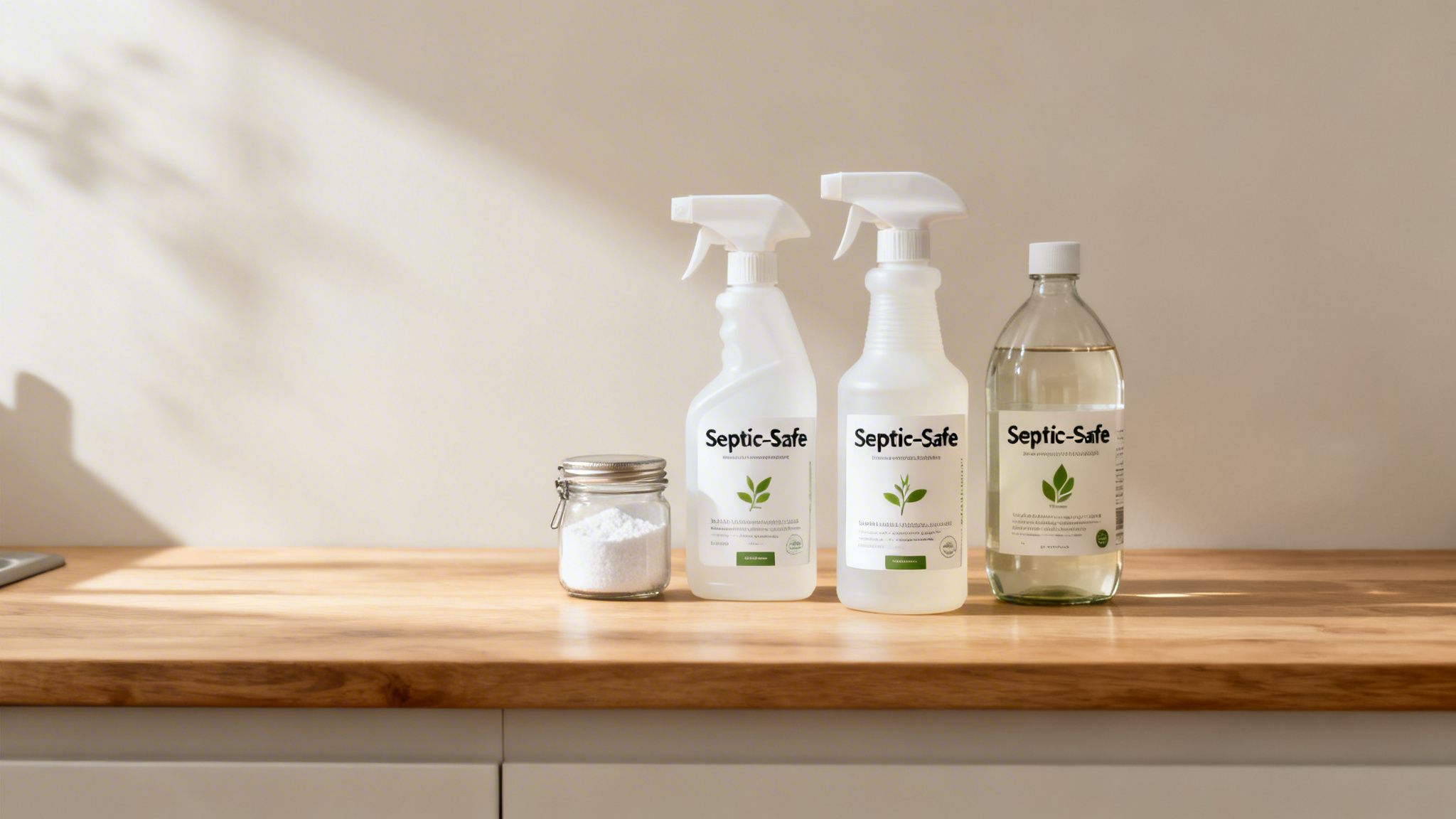
Protecting this bacterial balance prevents premature sludge accumulation and ensures the liquid effluent flowing into your drain field is properly treated. A healthy tank ecosystem translates directly to a longer-lasting and more efficient septic system, saving you from the headache of backups and the high cost of drain field repairs.
Why Your Product Choices Matter
The wrong products can either poison your system with chemicals or clog it with indigestible solids. Both scenarios disrupt the natural process and can lead to costly damage. Here’s how common household items can cause problems:
- Harsh Chemicals: Bleach, drain cleaners, and antibacterial soaps are designed to kill bacteria. When introduced into your septic tank, they do just that, wiping out the beneficial bacteria needed to break down waste.
- Indigestible Solids: Items like paper towels, dental floss, feminine hygiene products, and wet wipes do not break down in the tank. They accumulate, increasing the sludge layer and causing blockages in your pipes and drain field.
- Fats, Oils, and Grease (FOG): These substances cool and solidify in your pipes and tank, creating a thick scum layer that is difficult for bacteria to process. This can lead to severe clogs, which often manifest as a sink backing up, and is a primary cause of drain field failure.
Key Insight: Think of your septic system as a sensitive stomach. It can digest natural, organic materials but will get sick if you feed it chemicals or plastics. Every flush and every drain contributes to either its health or its decline.
Actionable Tips for a Septic-Safe Home
Making small changes to your household habits can have a massive impact on your system’s longevity:
- Read the Label: Choose cleaning products and detergents that are specifically labeled “septic-safe” or “biodegradable.” Opt for enzyme-based cleaners or natural alternatives like vinegar and baking soda.
- Toss, Don’t Flush: The toilet is only for human waste and septic-safe toilet paper. Place a trash can in every bathroom for non-flushable items like wipes, diapers, and feminine products.
- Contain the Grease: Never pour cooking grease, fats, or oils down any drain. Collect them in a sealed container (like an old coffee can) and dispose of them in the trash once solidified.
- Educate Everyone: Make sure all family members and guests understand the rules. A simple sign in guest bathrooms can prevent accidental flushing of harmful items.
4. Protect the Drain Field from Physical Damage and Overload
While the septic tank is a critical component, the drain field (or leach field) is the large, sensitive, and expensive part of your system responsible for safely filtering treated wastewater back into the soil. Physical damage from heavy weight, invasive tree roots, or oversaturation from excess water can compact the soil, crush pipes, and cause premature and complete system failure. Protecting this area is one of the most vital septic system maintenance tips for ensuring longevity and avoiding costly replacement.
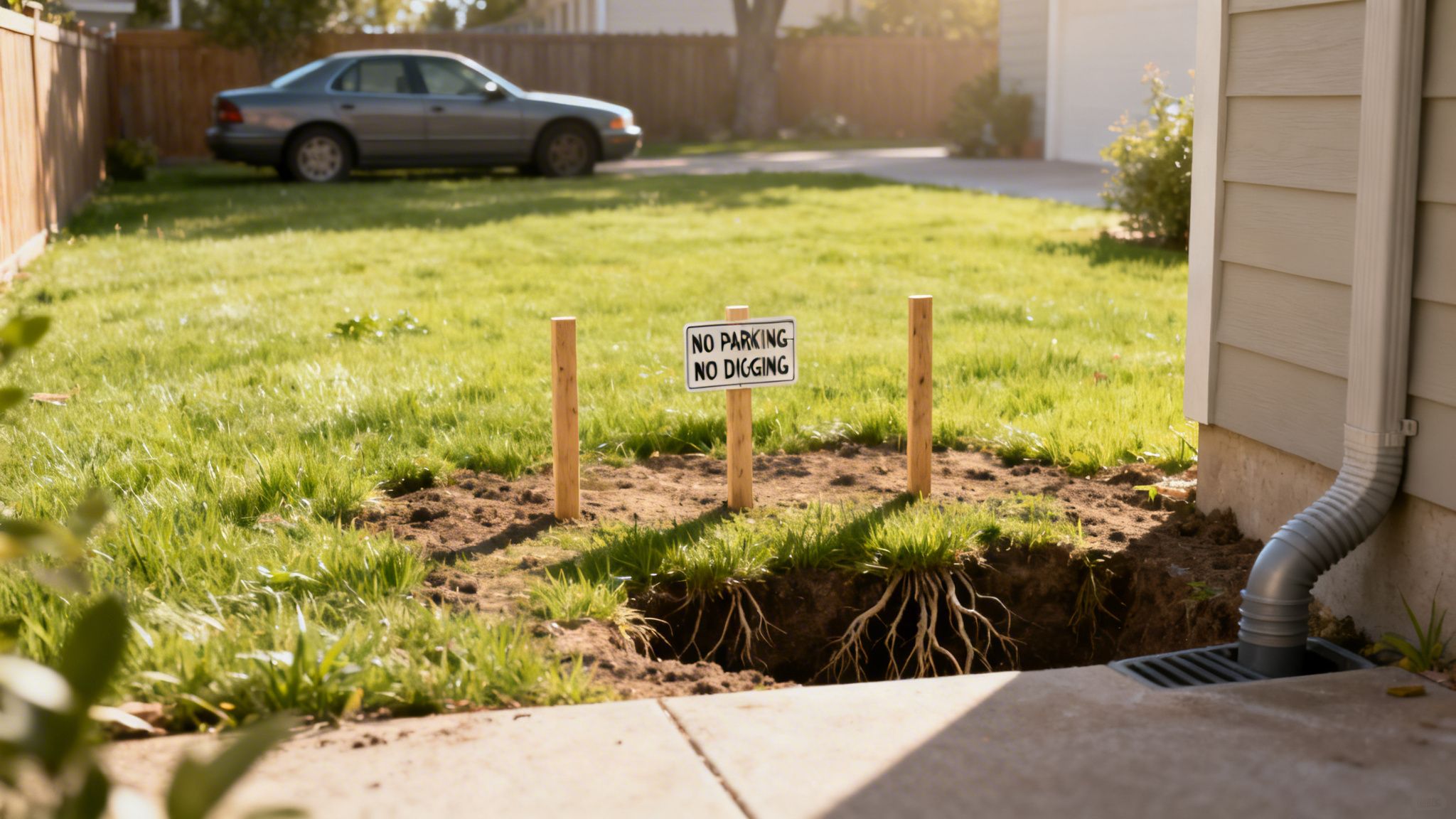
This proactive protection is essential because drain field repairs are complex and often involve full excavation and replacement, costing tens of thousands of dollars. A damaged drain field can no longer absorb effluent, leading to soggy, foul-smelling areas in your yard and potential groundwater contamination.
Why Drain Field Protection Varies
The specific risks to your drain field depend on your property’s layout, landscaping, and how you use your land. The aformentioned general guidelines apply to everyone, but your specific needs will depend on these factors:
- Property Use: Do you host large events with lots of guest parking? Do you need to bring in heavy equipment for landscaping or construction? A survey of Lone Oak septic systems revealed that driveway parking extending over the drain field was a contributing factor in nearly 20% of system failures.
- Landscaping: The types of plants near your system matter immensely. Fast-growing trees with aggressive root systems, like willows or oaks, can penetrate and clog drain pipes within 10 to 15 years, requiring a full replacement.
- Water Management: Poor drainage can be a system killer. A home where gutter downspouts and surface runoff are directed toward the septic system can cause hydraulic overload, leading to failure in as little as six months during periods of heavy rainfall.
Key Insight: Treat your drain field like a protected zone. Clearly mark its boundaries and communicate its location and purpose to all family members, visitors, and contractors. A simple rule of “nothing heavier than a lawnmower” can prevent a catastrophic mistake.
Actionable Protection Tips
To keep your drain field safe and functional, implement these best practices:
- Establish a No-Go Zone: Mark the drain field’s location and establish firm rules against parking vehicles, storing heavy materials, or building any structures (patios, sheds, pools) over it.
- Manage Water Runoff: Divert all gutter downspouts, sump pump discharge, and other surface water at least 10 feet away from the drain field area to prevent soil saturation.
- Plant Smart: Only plant shallow-rooted grasses and small decorative plants over the drain field. Avoid planting trees and large shrubs within 30 feet of the system’s edge.
- Consider Root Barriers: If you have existing trees within 100 feet of your system, consider having a professional install a root barrier to prevent future root intrusion. This is a preventative measure that can save your system.
- Consult a Pro for Projects: Before any major landscaping or construction project, contact a professional like On The Way Plumbing. A quick assessment can help you plan your project without risking tens of thousands of dollars in septic system damage.
5. Schedule Professional Septic Inspections Annually or Before Property Transfer
While regular pumping manages accumulated solids, a professional inspection provides a comprehensive health check-up for your entire septic system. Unlike pumping, which is a removal service, an inspection is a diagnostic process. Certified inspectors use visual assessments, dye tests, and advanced sewer camera technology to identify hidden damage, evaluate the system’s capacity, and ensure it complies with local codes. This proactive approach is one of the most effective septic system maintenance tips for catching problems 12-24 months before they lead to catastrophic failure.
An inspection is also a critical, and often mandatory, step during real estate transactions. For both buyers and sellers in Hunt County, a pre-sale septic inspection reveals the system’s true condition, identifying necessary repairs and potential replacement costs. A homebuyer who invests in an inspection might uncover a $12,000 drain field failure, empowering them to renegotiate the purchase price or walk away from a bad investment.
Why Inspections are Non-Negotiable
A professional inspection can save you from immense financial and logistical headaches. It goes beyond what a homeowner can see, identifying issues that build up silently over years.
- Early Problem Detection: An annual inspection can detect a cracked tank lid or a deteriorating baffle early. A minor repair costing a few hundred dollars can prevent a complete system replacement that could cost over $15,000.
- Legal & Financial Protection: In many areas, including here in Texas, septic inspections are required by lenders and insurers before a property transfer can be completed. This protects the buyer from inheriting a failed system and preserves the seller’s property value.
- Performance Assessment: The inspection confirms that your tank, pipes, and drain field are all working in harmony. It can identify overloaded systems or early-stage clogs that, if left unaddressed, will eventually cause sewage backups.
Key Insight: Don’t confuse a septic inspection with a standard home inspection. Most home inspectors perform only a basic visual check. A certified septic inspection involves specialized tools and expertise to assess the internal and underground components, providing a far more accurate and legally defensible report.
Actionable Inspection Tips
To get the most value from your septic inspection, follow these best practices:
- Request a Camera Inspection: A visual check is not enough. Insist on a sewer camera inspection to assess the internal condition of the pipes leading from your home to the tank and from the tank to the drain field.
- Schedule During Dry Seasons: Plan your annual inspection for the fall or winter. Drier ground conditions provide easier access to components and can make certain drain field issues more apparent.
- Demand a Detailed Report: A proper inspection concludes with a written report containing photographs, measurements of sludge and scum levels, a diagram of your system’s layout, and clear recommendations for any necessary repairs.
- Hire Licensed Professionals: Ensure your inspector is licensed and insured. For services in the Lone Oak area, a qualified provider like On The Way Plumbing (License #M-44817) can perform legally compliant inspections.
- Plan Ahead for Real Estate: If you’re selling your home, schedule the inspection 30-60 days before listing the property. This gives you time to make any required repairs without delaying the closing process. For more information on what inspectors look for, you can learn about common problems found in Lone Oak plumbing systems.
6. Conserve Water and Install Low-Flow Fixtures to Reduce System Load
One of the most effective and often overlooked septic system maintenance tips is managing the sheer volume of water your system has to process daily. Your septic system is designed to handle a specific hydraulic load, typically based on the number of bedrooms in your home. Overloading it with excessive water usage rushes wastewater through the tank, giving solids less time to settle and bacteria less time to work. This pushes solid waste into the drain field, leading to premature and costly failure.
This preventative strategy is vital because reducing the hydraulic load extends the life of your entire system. A septic system processing 30-50% less water experiences reduced bacterial stress, achieves better wastewater treatment, and significantly lowers the risk of drain field saturation. For homeowners, water conservation is a direct investment in the longevity of one of their property’s most expensive components.
Why Water Conservation is a Game-Changer
Reducing your household’s water consumption provides immediate and long-term benefits that go beyond just your septic system. A family of four, for instance, can easily reduce daily water usage from over 300 gallons to under 200 gallons simply by upgrading fixtures and changing habits.
- System Lifespan: Less water means less wear and tear. This simple change can extend the functional life of your septic system by 10 to 20 years.
- Treatment Efficiency: When wastewater moves more slowly through the tank, it allows for more effective separation of solids and scum, protecting the drain field.
- Cost Savings: Using less water directly translates to lower utility bills. It also helps you avoid the tens of thousands of dollars associated with a drain field replacement.
- Leak Prevention: A focus on water conservation often helps identify hidden leaks. A single, unseen dripping pipe can waste thousands of gallons per year, not only straining your septic system but also risking foundational damage. For more on this, you can learn about the costs of professional slab leak detection and repair.
Key Insight: Think of your septic system like a highway during rush hour. Reducing water usage is like removing half the cars from the road. Traffic flows smoothly, there are fewer accidents (clogs), and the infrastructure (your drain field) lasts significantly longer.
Actionable Water-Saving Tips
To start reducing your system’s workload immediately, implement these high-impact changes:
- Upgrade Your Toilets: Toilets account for up to 30% of indoor water use. Replace old models with modern, WaterSense-certified toilets that use 1.28 gallons per flush (GPF) or less.
- Fix Leaks Immediately: A dripping faucet wasting five gallons daily adds up to over 1,800 gallons of unnecessary water your septic system must process each year.
- Install Low-Flow Fixtures: Inexpensive low-flow showerheads and faucet aerators are quick, DIY-friendly fixes that can drastically cut water consumption without a noticeable change in pressure.
- Manage Laundry Loads: Spread laundry throughout the week instead of doing multiple loads in one day. This prevents “shock loading” the system with a sudden, large volume of water.
- Choose Efficient Appliances: When it’s time to replace your washing machine, select an ENERGY STAR certified model, which can use 60-80% less water than older machines.
7. Create a Maintenance Log and Track System Performance Over Time
Just as you keep records for your car or home appliances, maintaining a detailed log for your septic system is a powerful, yet often overlooked, management tool. This log is a historical record of your system’s life, documenting every service, inspection, repair, and observation. Over time, this history reveals crucial patterns, helps you anticipate needs, and provides invaluable documentation for property value and future troubleshooting.
This simple practice transforms reactive problem-solving into proactive management. A well-kept log can help a service technician diagnose issues faster, support a warranty claim, or provide peace of mind to a potential home buyer. For homeowners, it’s one of the most effective septic system maintenance tips for optimizing costs and extending the system’s lifespan.
Why a Maintenance Log is Invaluable
A detailed log is more than just a list of dates; it’s a data-driven guide to your system’s health. The information you track helps you make informed decisions instead of guessing about your maintenance needs.
- Identifies Performance Patterns: Does your system struggle during heavy rain seasons? Do you notice slower drains when you have house guests? Tracking these observations reveals how usage and environmental factors impact performance.
- Optimizes Pumping Schedules: A homeowner’s 12-year log might reveal a consistent sludge accumulation rate, allowing them to confidently shift from a generic 3-year pumping schedule to a more cost-effective 4-year interval, saving money without risking system health.
- Supports Property Transactions: When selling your home in the Lone Oak area, a comprehensive maintenance log is proof of a well-cared-for system. This documentation can justify a higher asking price and give buyers the confidence to proceed without hesitation.
Key Insight: Your septic maintenance log is your system’s “medical chart.” By recording details from each professional visit, like sludge and scum layer measurements, you create a baseline that allows you to spot gradual deterioration long before it becomes an emergency.
Actionable Logging Tips
Creating and maintaining your log is simple. Whether you use a physical notebook or a digital spreadsheet, consistency is key.
- Build a Simple Template: Create columns for: Date, Service Type (Pumping, Inspection, Repair), Service Provider, Cost, and Detailed Notes/Findings.
- Document Everything: Record exact pumping dates and the sludge/scum levels reported by the technician. Scan and save all invoices, reports, and photos of any repair work.
- Note Your Own Observations: Regularly jot down any unusual odors, slow drains, gurgling sounds, or wet spots you notice in the yard near the drain field.
- Go Digital for Accessibility: Use a cloud-based spreadsheet or a dedicated folder in a service like Google Drive or Dropbox. This makes it easy to share with your service provider, like On The Way Plumbing, and ensures it’s never lost.
8. Obtain Professional Repair and Replacement Services from Licensed Contractors
When a septic system moves beyond routine maintenance and requires repair or replacement, it is not a DIY project. These complex systems demand specialized equipment, permits, and a deep understanding of environmental and public health regulations. In Texas, state law (§366.012) requires that septic system work be performed by licensed professionals to ensure it is done correctly and safely. Attempting repairs yourself or hiring an unlicensed handyman can void warranties, violate building codes, create significant health hazards, and lead to catastrophic failures costing $5,000 to $30,000 to correct.
Hiring a licensed contractor is a non-negotiable step in responsible septic system maintenance tips. A professional ensures the job is done right the first time, protecting your property value and the local environment. For example, a homeowner’s DIY pipe patch might seem to save money initially, but when it fails within months, the professional replacement can cost thousands more. Similarly, an unlicensed contractor might install a tank that violates local codes, forcing the homeowner to pay for a complete re-installation by a certified company.
Why Licensed Professionals are Essential
Choosing a licensed and insured contractor is a critical decision that safeguards your investment and health. Here’s why it matters:
- Code Compliance: Licensed professionals understand the specific permitting and installation requirements for Hunt County and the eastern Dallas area, ensuring your system is fully compliant with state and local regulations.
- Technical Expertise: They possess the training to accurately diagnose issues, from a blocked drain line to complete drain field failure, and use the proper techniques and equipment for lasting repairs.
- Safety and Liability: A licensed contractor carries liability insurance, protecting you from financial responsibility in case of accidents or property damage during the project.
- Long-Term Reliability: Professional installations and repairs are built to last, providing peace of mind and preventing premature system failure. For stubborn clogs, they can also perform advanced services like hydro jet drain cleaning without damaging your pipes.
Key Insight: Never take a contractor’s word for it. You can and should verify any plumber’s license through the Texas Department of Licensing and Regulation (TDLR) website before hiring them. A legitimate professional will encourage you to do so.
Actionable Hiring Tips
To ensure you hire a qualified and trustworthy professional, follow this checklist:
- Verify Credentials: Ask for the contractor’s license number (e.g., On The Way Plumbing, License #M-44817) and verify it with the TDLR. Request proof of liability insurance, looking for coverage of at least $1 million.
- Get Written Estimates: Obtain 2-3 detailed written quotes. Compare not just the price but the scope of work, materials used, timeline, and warranty details.
- Check References: Ask for at least three recent references with contact information. A reputable company will gladly provide them.
- Confirm Permits: Ensure the contractor is responsible for obtaining all necessary local permits before any work begins.
- Avoid Red Flags: Be wary of contractors who ask for cash-only payments, offer no written warranty, or cannot provide a physical business address and proof of insurance.
8-Point Septic System Maintenance Comparison
| Maintenance Action | Implementation Complexity | Resource Requirements | Expected Outcomes | Ideal Use Cases | Key Advantages |
|---|---|---|---|---|---|
| Regular Septic Tank Pumping Every 3–5 Years | Low — schedule service with a pro | Moderate — $300–$500 per pump, truck access | Removes solids, prevents backups, extends system life | Typical households, multi-person homes, properties with disposals | Prevents costly repairs, maintains efficiency, reduces contamination risk |
| Monitor Water Usage and Identify Leaks Early | Low–Medium — ongoing monitoring and checks | Low to moderate — time; leak detection tools $200–$400 | Detects leaks early, reduces hydraulic overload and waste | Homes with unexplained high bills or old plumbing | Saves water/bills, protects septic load, prevents structural damage |
| Use Septic‑Safe Household Products and Avoid Problem Items | Low — change purchase/use habits | Low — slightly higher product cost (≈10–20%) | Preserves beneficial bacteria, reduces clogs and toxins | Households using harsh cleaners or disposals | Prevents system failure, improves groundwater safety, long-term savings |
| Protect the Drain Field from Physical Damage and Overload | Medium — planning, landscaping controls | Moderate — signage/root barriers $500–$1,500; possible landscaping costs | Preserves soil treatment capacity, prevents drain field failure | Properties with vehicles, trees, construction nearby | Avoids expensive replacements, preserves resale value |
| Schedule Professional Septic Inspections Annually or Before Sale | Low — hire licensed inspector and coordinate access | Moderate — $300–$600 per inspection; camera/sounding tools | Early problem detection, documented condition and compliance | Annual maintenance, pre-sale, suspected issues | Detects issues early, meets lender/insurance requirements, reduces repair costs |
| Conserve Water & Install Low‑Flow Fixtures | Medium — retrofit fixtures and change habits | Moderate–High — $1,500–$5,000 whole‑home; fixtures $15–$300 each | Lowers hydraulic load, extends system life, cuts water bills | High‑usage households, older systems near capacity | Significant bill savings, longer system lifespan, potential rebates |
| Create a Maintenance Log and Track System Performance | Low — routine record-keeping | Low — time (30–60 min/yr) and simple digital tools | Reveals trends, optimizes service intervals, supports claims | Property managers, multi-unit properties, sellers | Improves budgeting, supports resale, documents warranty/repairs |
| Obtain Professional Repair & Replacement Services from Licensed Contractors | Medium–High — permits, technical repair/replacement | High — $5,000–$30,000+; permits $100–$500; licensed crews/equipment | Code‑compliant repairs or replacement, restored safe operation | System failures, major repairs, code violations, replacements | Ensures compliance, warranty protection, faster reliable resolution |
Your Partner in Long-Term Septic System Health
Navigating the responsibilities of septic system ownership can feel complex, but it boils down to a simple, powerful principle: proactive care prevents reactive crises. Throughout this guide, we’ve explored the essential pillars of septic system maintenance, moving beyond vague advice to provide actionable, concrete strategies. From establishing a consistent pumping schedule to being mindful of what goes down your drains, each tip is a crucial component in a holistic maintenance strategy. Mastering these septic system maintenance tips is not just about avoiding costly repairs; it’s about protecting your property’s value, ensuring the health of your local environment, and gaining invaluable peace of mind.
Think of your septic system not as a “set it and forget it” utility, but as a living, biological ecosystem that requires your attention and care. The small, consistent actions you take every day, like conserving water and choosing septic-safe cleaners, have a cumulative and profound impact on its longevity and performance. By implementing these practices, you are directly investing in the long-term health of one of your home’s most vital and expensive assets.
Key Takeaways for Proactive Septic Care
Let’s distill the core principles from this guide into a clear action plan. These are the non-negotiable habits that form the bedrock of a trouble-free septic experience:
- Consistency is King: The single most important takeaway is the power of a routine. Scheduling professional pumping every 3 to 5 years and conducting annual inspections are not optional tasks; they are the foundation of preventative care. Mark your calendar, set digital reminders, and treat these appointments with the same importance as any other critical home maintenance task.
- Mindful Household Habits: Your septic system’s health is a direct reflection of your daily habits. Every flush, every drain, and every appliance cycle matters. The transition to septic-safe products, the careful disposal of non-flushable items, and the conscious effort to reduce water waste are small changes that yield massive long-term benefits, reducing the strain on your system and extending its operational life.
- The Drain Field is Sacred Ground: Protecting your drain field is just as critical as maintaining the tank itself. This means preventing soil compaction from vehicles or heavy equipment, managing landscaping to keep aggressive root systems at bay, and ensuring proper drainage to avoid waterlogging the area. A healthy drain field is essential for the final, critical stage of wastewater treatment.
Your Next Steps to a Healthier System
Moving from knowledge to action is the most critical step. You now have the blueprint for effective septic system maintenance. The next move is to put it into practice. Start by creating a dedicated maintenance log. Document the date of your last pump-out, record the professional who serviced it, and note any observations or recommendations they provided. If you don’t know this information, now is the perfect time to schedule a professional inspection to establish a baseline for your system’s health.
This journey transforms you from a passive homeowner into an empowered steward of your property. By embracing these septic system maintenance tips, you are not just checking items off a list. You are actively participating in a process that safeguards your investment, protects your family’s health, and contributes to the well-being of the local environment. This proactive stance is the ultimate key to a long-lasting, efficient, and worry-free septic system for years to come.
For homeowners in Lone Oak, Hunt County, and the greater eastern Dallas area, partnering with a trusted local expert is essential. On The Way Plumbing Leak Specialist provides the licensed, experienced service you need for everything from routine inspections and pumping to complex repairs and diagnostics. Contact us to schedule your next service and ensure your system is in the best possible hands.