

When you see dirty water creeping back up your sink drain, it’s a clear sign of a blockage. Usually, it’s nothing more than a buildup of grease, food scraps, or soap scum that has finally decided to clog things up.
The key is to act fast but stay calm. Before you do anything else, immediately stop running the water. Then, clear out the cabinet under the sink to keep your belongings from getting soaked. It’s also a smart move to avoid pouring harsh chemical drain cleaners down there—they can do more harm than good to your pipes.
If you’ve tried the DIY route and your sink is still giving you trouble, don’t hesitate to call in the experts. For reliable, professional service in Lone Oak and the eastern Dallas area, trust the experienced team at On The Way Plumbing Leak Specialist. We have the right tools and know-how to diagnose and fix your plumbing problems fast! Call (903) 458-4026 today for an estimate!
Your First Steps for a Backed Up Sink
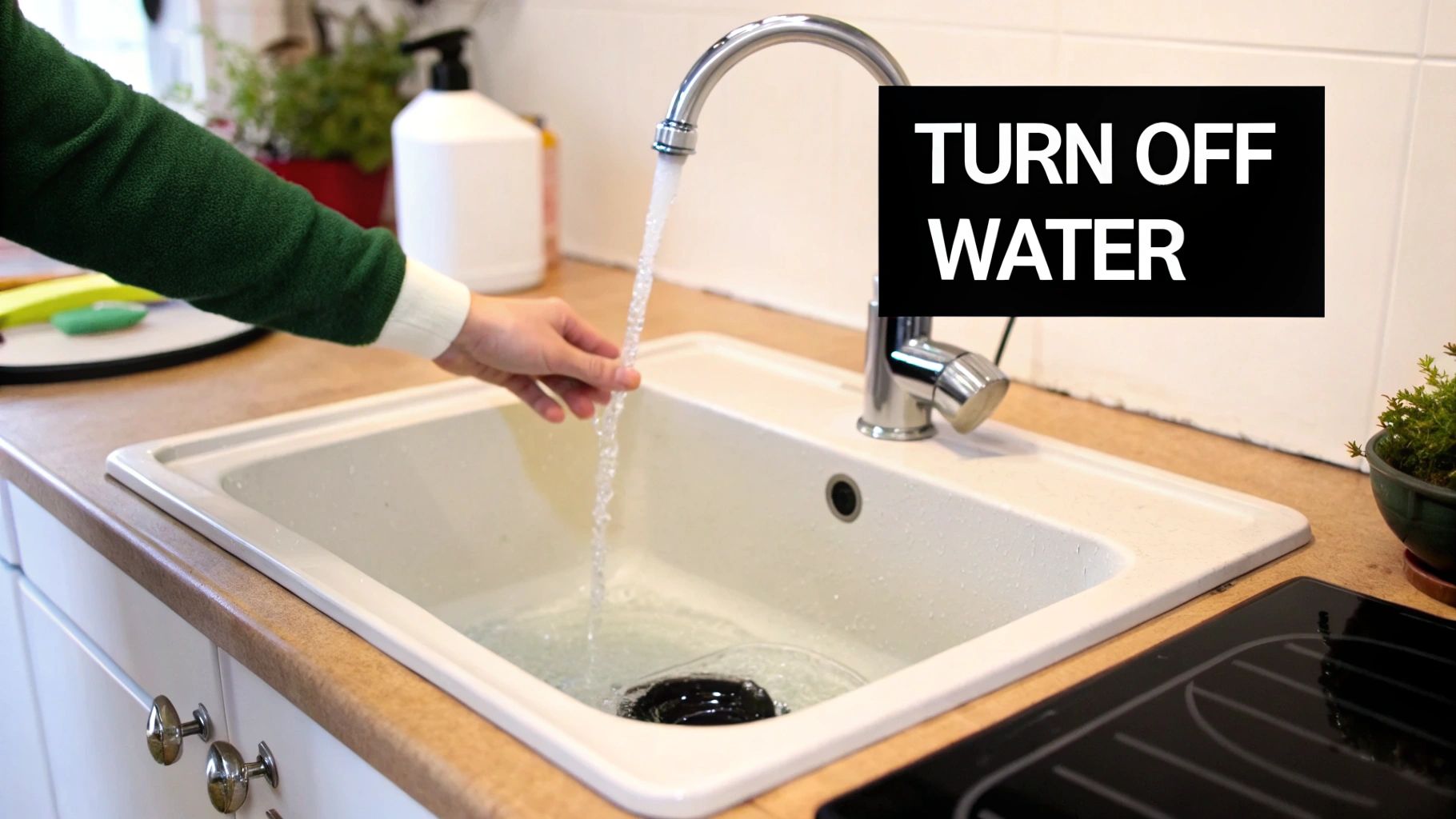
That moment of panic when you see the sink filling up is real, but a methodical approach will save you a much bigger headache. Your first priority isn’t fixing the clog; it’s damage control.
Turn off that faucet right away. Next, pull everything out from under the sink—cleaning supplies, buckets, anything you want to keep dry. Grab an old towel or a small bucket and place it directly under the P-trap (that U-shaped pipe). This simple step can catch any unexpected drips or leaks while you work.
This little bit of prep work makes a world of difference. It gives you a clean, dry space to figure out what’s going on without worrying about causing water damage to your cabinets.
Identifying the Common Culprits
Most sink clogs don’t just happen overnight. They’re the result of a slow, steady buildup, and the cause usually depends on which sink is giving you trouble.
We see this all the time. A slow-draining sink is your first warning sign. If you hear gurgling sounds or notice water is taking its sweet time to drain, that’s your plumbing telling you a blockage is forming. Tackling it early is always better than dealing with a full-blown backup.
If the problem keeps coming back, there might be something more serious hidden deeper in your pipes. A professional plumbing camera inspection can be a real game-changer, letting us see exactly what’s happening in there.
Is It a Simple Clog or a Bigger Issue?
While a backed-up sink feels like a personal problem, it’s incredibly common. The sink drain market was valued at a whopping US$ 2,450 million in 2024 and is expected to keep growing. That number alone tells you how often homeowners are dealing with this.
In areas like Lone Oak, we often see older homes built before 2000 with outdated drains that are more prone to backups, which can sometimes point to bigger issues in the main sewer line.
A quick way to gauge the seriousness of the problem is to check other drains. If it’s just one sink acting up, the clog is probably localized right there. But if your toilets are flushing slowly or other drains are also backed up, you could be looking at a main sewer line blockage.
To help you narrow it down, here’s a quick guide to what’s likely causing your backup based on the sink’s location.
Common Sink Backup Causes by Location
| Location | Primary Culprits | Common Signs |
|---|---|---|
| Kitchen Sink | Grease, fats, oils, food scraps, coffee grounds | Standing water, foul odors from the drain, slow draining, gurgling noises when the dishwasher runs |
| Bathroom Sink | Hair, soap scum, toothpaste, small objects | Slow water drainage, visible gunk around the drain stopper, unpleasant smells |
This table covers the usual suspects we find on service calls. Knowing what you’re up against is the first step in getting things flowing smoothly again.
Your Essential Toolkit for Clearing a Backed Up Sink
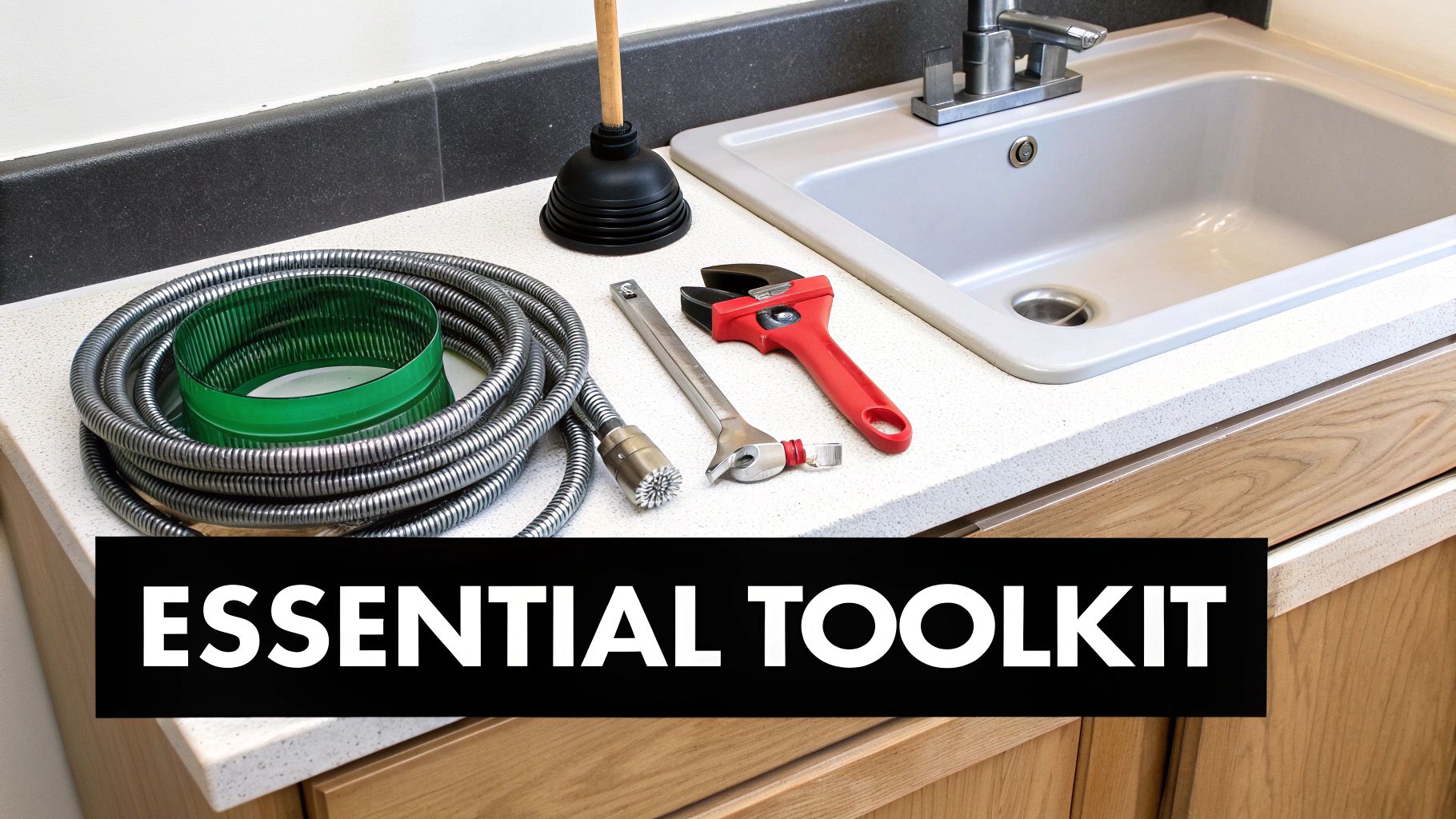
When you’re staring at a sink full of murky, standing water, your first instinct might be to call for backup. But hold that thought. Many common clogs can be cleared out with just a few basic tools and a little bit of know-how. Before you even think about reaching for harsh chemical drain cleaners, let’s walk through some proven DIY methods that we pros use all the time.
These are your first lines of defense, and they’re surprisingly effective against the usual suspects—grease, soap scum, and hair that have built up over time. The smartest approach is to start with the simplest tool and work your way up to the more involved fixes.
The Power of a Plunger
You’d be surprised how often a simple cup plunger is all you need. The trick isn’t about brute force; it’s about creating a solid vacuum seal to push the clog out of the way.
First, you need enough water in the sink to completely cover the plunger’s cup—a couple of inches will do the trick. That water is what creates the hydraulic pressure to dislodge the blockage. If you’re working on a double-basin kitchen sink, be sure to plug the other drain with a wet rag. This forces all the pressure down toward the clog.
Press the plunger cup firmly over the drain to get a tight seal. Then, give it a series of quick, sharp pumps. After about 15-20 seconds of steady plunging, pull the plunger off and see if the water starts to swirl down the drain.
Using a Simple Plumbing Snake
If the plunger didn’t cut it, the clog might be a bit more stubborn or located further down the pipe. This is where a simple plumbing snake (sometimes called a zip-it tool) really shines, especially for bathroom sinks where hair is almost always the main culprit.
These cheap plastic tools are covered in little barbs designed to snag and pull out whatever is causing the jam.
- Feed it in: Carefully guide the tool down into the drain opening.
- Wiggle it past: Gently push and wiggle it past the drain stopper until you feel it hit the blockage.
- Pull it out: Slowly pull the tool back out. You’ll likely bring a nasty clump of hair and gunk with it.
Don’t be surprised by what comes out! It’s a good idea to repeat the process a few times from different angles to make sure you’ve cleared everything out.
Pro Tip: Keep a small trash bag or an old bucket right next to you when you use a snake. The gunk you pull out is messy, and having a place to drop it immediately makes cleanup a whole lot easier.
Removing and Cleaning the P-Trap
Still no luck? The blockage is probably stuck in the P-trap—that U-shaped pipe right under your sink. Its job is to hold a bit of water to keep sewer gases from creeping into your home, but it’s also the perfect spot for heavy debris to get stuck.
To clear it out, you’ll need a few things:
- A bucket placed directly under the P-trap to catch the water and mess.
- Channel-lock pliers or a pipe wrench to get the nuts loose.
- Rubber gloves and a few old rags for the inevitable cleanup.
With your bucket in position, use the pliers to loosen the two large slip nuts holding the curved pipe in place. Once they’re loose, you should be able to finish unscrewing them by hand. Carefully lower the trap and dump its contents into the bucket.
Now that the trap is off, use an old brush or a wire to scrub out any gunk stuck inside. It’s also a good idea to peek into the exposed pipe leading into the wall to see if there’s any visible blockage there. Once it’s all clear, put the P-trap back on. Don’t overtighten the nuts—hand-tight plus a final quarter-turn with the pliers is plenty. Run hot water for a minute to flush the line and check for any leaks.
Tackling Stubborn Clogs with Advanced Tools
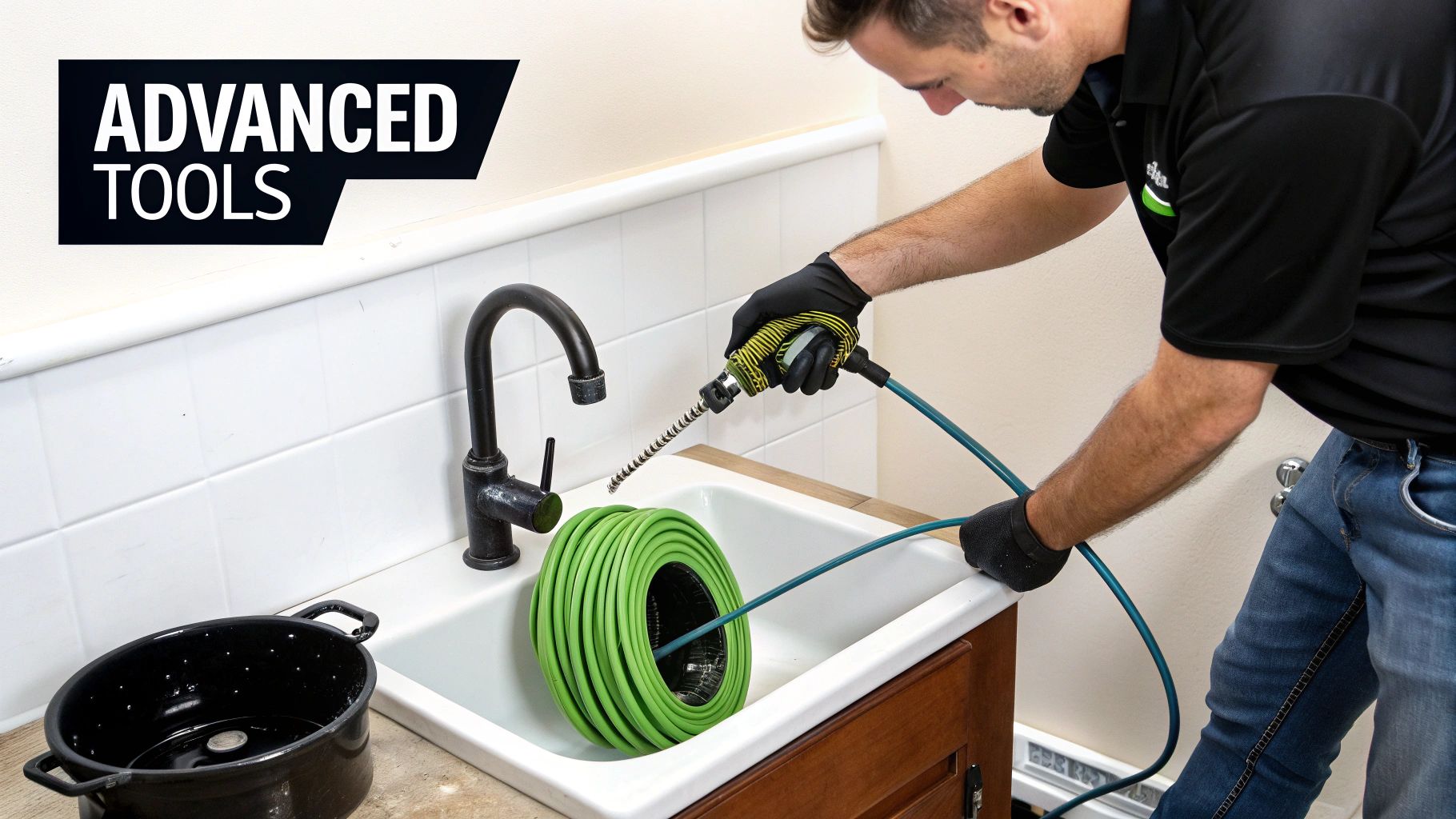
Sometimes, a plunger and a simple drain stick just aren’t going to cut it. When you’re facing a sink that’s stubbornly backing up, it’s a good sign the blockage is either too dense or just too far down the pipe for the basic methods to reach. This is where you have to step up your game and bring in the more powerful tools.
These advanced tools are designed for the kinds of clogs that laugh off your initial efforts. They can reach deeper, apply more force, and obliterate blockages that might have been building up for years. But remember, with greater power comes a greater need for caution to avoid damaging your plumbing.
Leveling Up with a Drain Auger
When a simple snake fails, the next logical move is a drain auger. You can think of it as a snake’s much stronger, longer, and more effective older sibling. While a basic snake is great for pulling out hair right near the drain opening, an auger is built to travel deep into your plumbing system to break apart those seriously compacted clogs.
An auger has a long, flexible steel cable with a corkscrew-like tip, all housed inside a drum. You feed the cable into the drain and turn a crank to extend it. Once it hits the blockage, that rotating tip either drills right through the gunk or hooks onto it so you can pull the whole mess back out.
Operating an auger does require a bit of finesse.
- Feed Slowly: Gently guide the cable into the drain until you feel some resistance. Whatever you do, don’t force it—you could end up damaging the pipe.
- Crank and Push: Once you hit the clog, start turning the crank while applying steady, gentle pressure. You should feel the cable start to work its way through the blockage.
- Retract Carefully: After breaking through, slowly pull the cable back. You’ll probably pull back remnants of the clog, so have a bucket and some old towels ready.
Using an auger can be tricky. If you feel the cable get stuck or it starts to bend back on itself, stop immediately. Applying too much force can cause the cable to kink or even scratch the inside of older, more fragile pipes.
The Ultimate Solution: Hydro Jetting
For the most severe and recurring clogs, there’s a professional-grade solution that no DIY tool can match: hydro jetting. This is basically the plumbing equivalent of pressure washing the inside of your pipes. It’s not just about clearing a single clog; it’s about restoring your entire drain line to a like-new condition.
Hydro jetting uses a specialized hose and nozzle to blast water at incredibly high pressures—up to 4,000 PSI—into your pipes. This powerful stream of water obliterates everything in its path, from years of hardened grease and soap scum to invasive tree roots. It’s the most thorough cleaning your pipes can possibly get.
This method is especially effective for the heavy grease buildup that’s so common in kitchen sinks. To see this powerful process in action, you can check out our guide on professional hydro jet drain cleaning. Because of the specialized equipment and the real potential to damage pipes if done incorrectly, hydro jetting is strictly a job for trained and licensed professionals.
How to Keep Your Drains Flowing Freely
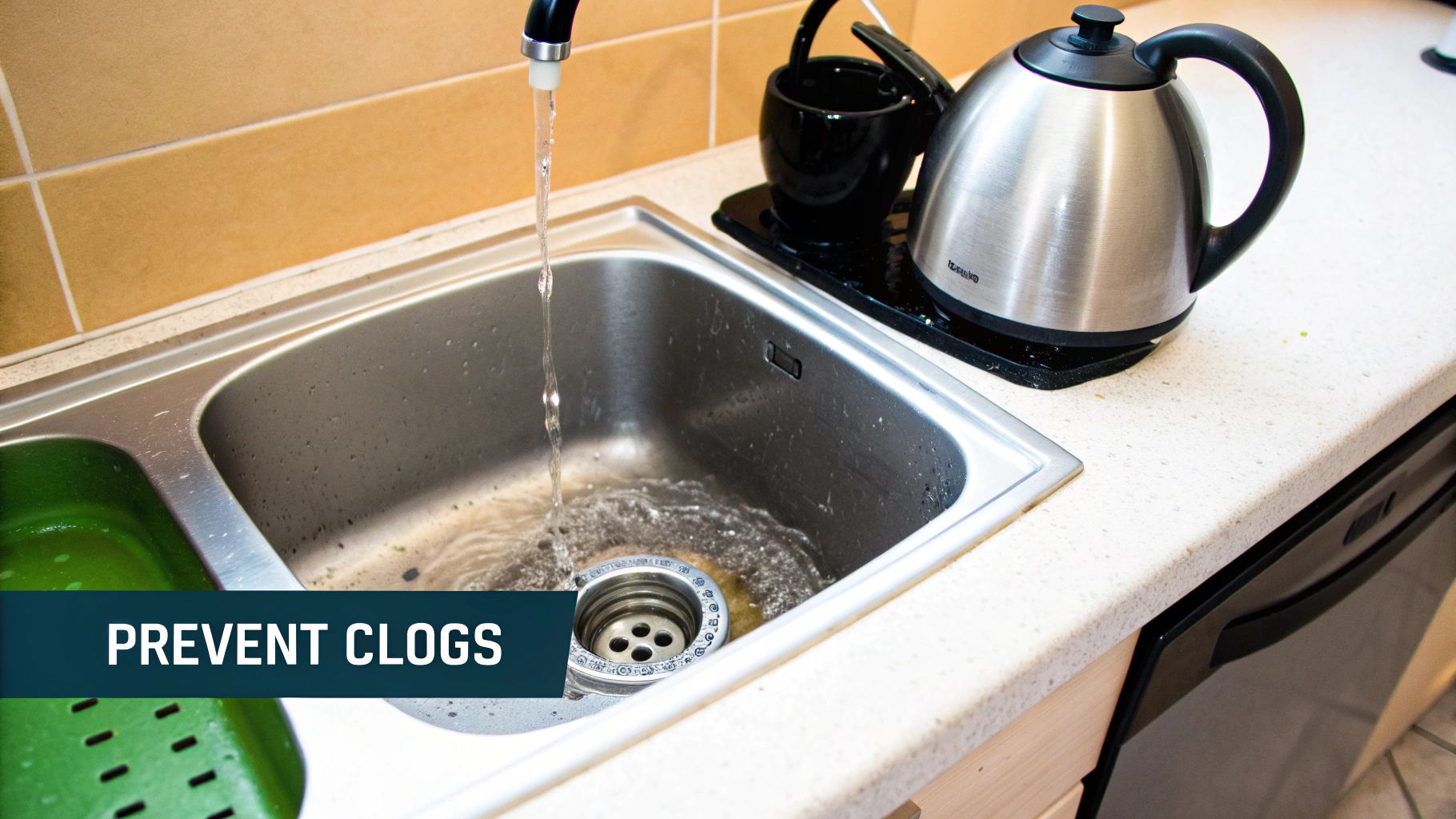
After you’ve gone through the hassle of clearing a stubborn clog, the last thing you want is a repeat performance. The best way to deal with a backed-up sink is to stop it from ever happening again.
Think of it as a small investment of time. A few simple habits can save you from future headaches, emergency plumbing calls, and the potential for costly water damage. It all comes down to being mindful of what you’re sending down the drain.
Simple Habits for Clog-Free Drains
Most clogs don’t happen overnight. They’re the result of weeks and months of gunk slowly building up inside your pipes. The good news? That means consistent, simple actions can make a massive difference.
First off, make drain screens your new best friend. These cheap little mesh or silicone inserts sit right over the drain opening and catch food scraps, hair, and all sorts of other gunk before it has a chance to go down. It’s a remarkably simple and effective first line of defense.
Another great habit is to flush your drains with boiling water once a week. This simple step helps dissolve any grease or soap scum that’s just starting to cling to the pipe walls, washing it away before it can harden into a real problem.
What to Avoid Putting Down Your Sink
Let’s be clear: your sink drain is not a garbage can. Treating it like one is the quickest way to end up with a sink full of murky, standing water. Be especially wary of these common culprits:
- Fats, Oils, and Grease (FOG): Never, ever pour cooking grease, butter, or oil down the sink. It might be liquid when it’s hot, but as it cools, it solidifies inside your pipes, creating a sticky trap that catches everything else that comes along.
- Coffee Grounds: They seem harmless, but they don’t dissolve in water. Instead, they clump together and form a dense, sludge-like blockage that’s tough to break up.
- Fibrous Foods: Things like celery stalks, potato peels, and onion skins can wrap around your garbage disposal’s blades and create stringy messes that clog up the works.
- Expandable Foods: Pasta and rice are designed to absorb water and swell. They’ll keep doing that inside your pipes, which can quickly lead to a seriously tight clog.
The global market for drain unblockers hit a staggering USD 3.5 billion in 2023. That’s a lot of clogged sinks. In fact, data shows that 40-50% of residential plumbing calls are for clogs, many from grease buildup. A little proactive maintenance can save you up to 30% on future repair costs. You can read more about the scale of the sink unblocking industry to see just how common this problem is.
For older homes, especially in places like Hunt County, a professional drain cleaning is a smart investment. It’s a proactive move that clears out years of hidden buildup, stopping emergencies before they start.
Knowing When to Call a Professional Plumber
While tackling a simple clog yourself can be satisfying, it’s just as important to know when to put the tools down. Some backed-up sinks are sending a clear signal that there’s a much bigger headache brewing deeper in your plumbing. Pushing a DIY fix too far can turn a small problem into a catastrophe, complete with busted pipes and serious water damage.
Think of a stubborn clog as a symptom. The real skill is knowing the difference between a simple blockage you can handle and a sign of a major plumbing failure. Your plumbing system has a few tell-tale ways of screaming for professional help—it pays to listen.
Red Flags That Demand an Expert
Have you tried everything, only for the sink to gurgle and back up again? Or maybe you clear the clog, and it’s back in a week? That’s a classic sign of a deeper issue that a plunger or a small hand snake just can’t reach. A recurring clog usually means the original blockage was never fully removed, or something else is causing new clogs to form right behind it.
Here are the specific signs that mean you need a professional plumber, pronto:
- Multiple Drains are Backing Up: If your kitchen sink, toilet, and shower are all draining like molasses, the problem isn’t isolated. This is the number one sign of a main sewer line blockage, a serious issue that needs immediate, expert attention.
- Persistent Foul Odors: A nasty sewer smell that just won’t quit, even after you’ve cleaned the drain, points to trouble. It could be a blocked vent pipe or a severe blockage trapping smelly, stagnant water deep in the system.
- Water Backs Up in Unexpected Places: Ever run the washing machine and see water backing up into your shower drain? That’s not normal. This kind of crossover means there’s a pressure backup in your main drain line, and it’s forcing water up through whatever drain offers the least resistance.
Pushing a heavy-duty auger into a main sewer line without experience is a recipe for disaster. You can easily damage your pipes. A pro will use tools like a sewer camera to see exactly what they’re dealing with—be it tree roots, a collapsed pipe, or years of buildup—and apply the right fix without any guesswork.
Clogged drains are a massive headache for homeowners everywhere. In fact, the market for sink and drain unblockers was nearly $3 billion in 2021 and is still growing. You can see just how common this issue is by looking at the latest sink and drain unblocker market report. This data just goes to show why spotting a serious problem early is so critical.
If you’re seeing any of these more severe symptoms, the best and safest move is to call for professional help. For stubborn issues that go beyond a simple clog, our team can pinpoint the root cause; learn more about our services for kitchen sink clogs and let an expert take over.
Got Questions About Your Backed-Up Sink? We’ve Got Answers.
Even after you’ve tried a few things, a stubborn sink backup can leave you with more questions than answers. Plumbing can be tricky, and some situations are just plain confusing. As plumbers, we hear the same questions all the time, so let’s tackle a few of the most common ones we get on the job.
We’ve gone over the tools and the big warning signs, but what about those specific, head-scratching scenarios? Getting a handle on these will help you know when you can fix it yourself and when it’s time to call in a pro.
Your Top Sink Backup Questions Answered
One of the first things people ask about is those chemical drain cleaners you see on store shelves. They promise a quick fix in a bottle, but are they really a good idea?
The short answer from most plumbers is a hard no. We strongly advise against using harsh chemical drain cleaners. These caustic liquids can eat away at older metal pipes and even damage PVC, turning a simple clog into a much more expensive leak repair down the road. Worse, they often just burn a small tunnel through the gunk, giving you a temporary fix while leaving the real problem to build up again.
Another classic is the double-basin kitchen sink mystery. You’re washing dishes, and suddenly both sides are backing up at the same time. What gives?
When you see water backing up in both basins of your sink, it’s a dead giveaway that the clog isn’t in the individual drains. The real blockage is further down the line, past the point where the two drains connect into a single pipe. This usually points to a clog in the P-trap or, if you’re unlucky, a more serious obstruction deeper in the main drain line.
What Your Sink Is Trying to Tell You
Long before a sink stops draining completely, it usually sends out a few warning signals. That gurgling sound is a perfect example, and it’s one you definitely shouldn’t ignore.
That gurgle is the sound of trapped air fighting its way through water in a partially blocked pipe. It’s a clear sign that a clog is forming and messing with the normal flow of water and air. If you tackle the problem when you first hear the gurgles, you can often head off a complete, messy backup before it happens.
Finally, what about the garbage disposal? It can add another layer of confusion. If your sink is backed up, how can you tell if the disposal is the actual culprit?
The trick here is to pay attention to when the water backs up. If the sink only fills with water when you’re actively running the disposal, the unit itself is almost certainly clogged or jammed. But if water is backing up even when the disposal is off, the blockage is almost definitely in the P-trap or the drainpipe below it—not the disposal.
Short Questions and Answers
What are the first three things I should do when my sink backs up?
First, turn off the water immediately to prevent overflow. Second, clear everything out of the cabinet underneath the sink to protect your belongings. Third, place a bucket or towel under the pipes to catch any potential drips.
Why shouldn’t I use liquid chemical drain cleaners?
Harsh chemicals can corrode your pipes, especially in older homes, leading to more expensive leaks. They also rarely clear the entire clog, meaning the problem will likely return quickly, and they are harmful to the environment.
What do gurgling sounds from my sink mean?
Gurgling is an early warning sign that a clog is forming. It’s the sound of trapped air being forced through water in a partially blocked pipe. It’s your drain’s way of telling you a full backup might be on its way.
Is a kitchen sink clog different from a bathroom sink clog?
Absolutely. Kitchen clogs are almost always caused by a combination of grease, fats, oils, and food particles. In the bathroom, the number one culprit is a mixture of hair and soap scum, which binds together to create a stubborn blockage.