

That persistent septic smell in your house is more than just a nuisance—it’s your plumbing system’s way of screaming for help. Think of it as a smoke alarm for your drains. It’s a direct warning that sewer gas, which is supposed to stay sealed within your pipes, is leaking into your home.
Uncovering the Meaning Behind That Septic Smell
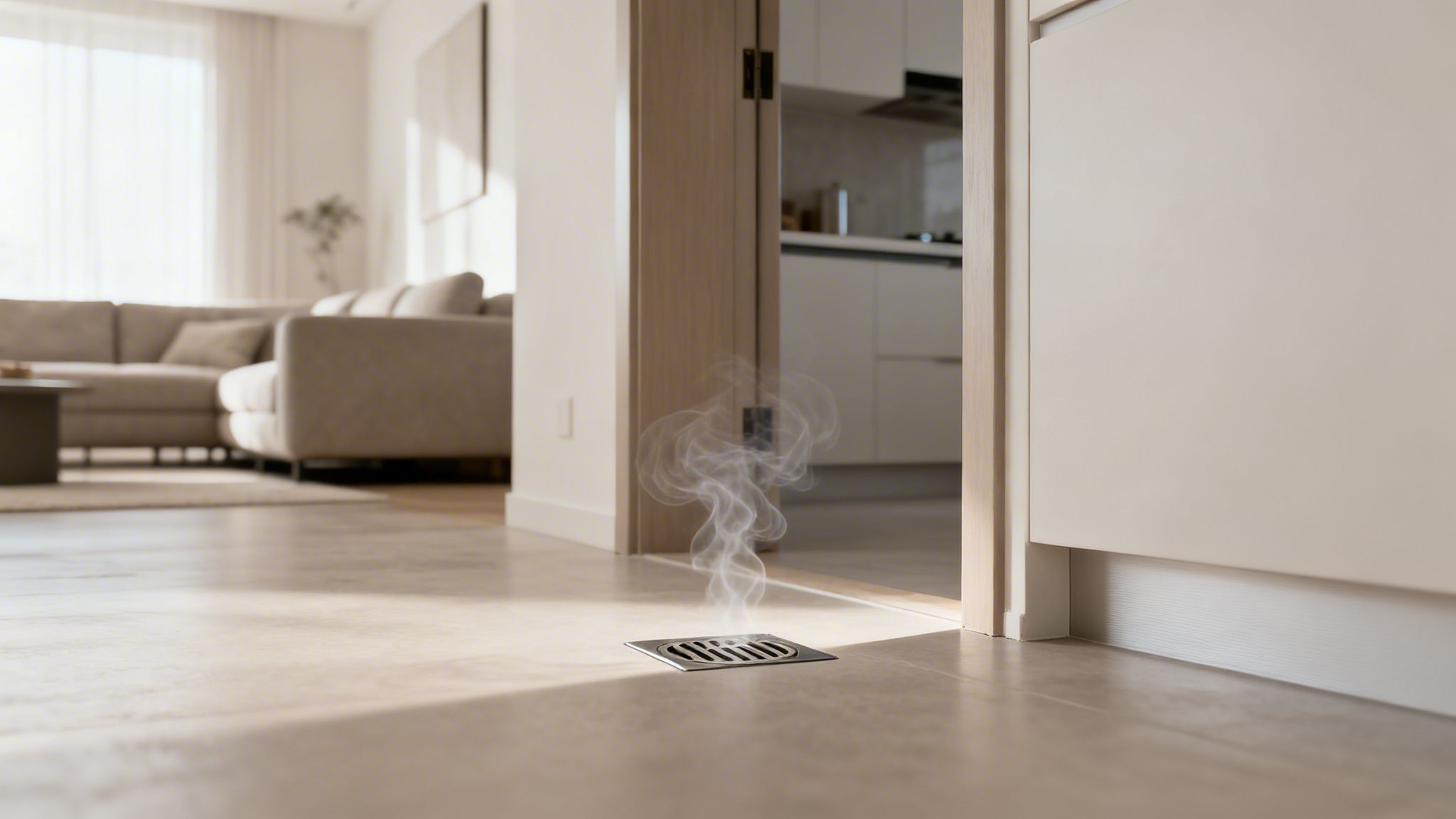
When you catch a whiff of that rotten-egg odor, it’s a sure sign that something’s not right. Your home’s plumbing is designed to be a closed system, a one-way street that carries waste and nasty gases safely away. That smell means there’s a breach somewhere in that system.
The good news? It’s often caused by something simple you can track down and fix in just a few minutes.
Common Triggers for Sewer Gas Odors
While we’ll dig deeper into the causes later, the problem usually boils down to one of a few common culprits. Getting familiar with them is the first step toward breathing easy again.
- Dry P-Traps: That U-shaped pipe under every sink and floor drain is meant to hold a little water, creating a barrier that blocks sewer gas. If a drain goes unused for a while, that water can evaporate, leaving an open door for odors.
- Compromised Wax Rings: The wax seal at the base of your toilet is a critical barrier. Over time, it can dry out, crack, or get damaged, allowing gas to seep out from the sewer line right into your bathroom.
- Blocked Plumbing Vents: Those pipes on your roof aren’t just for decoration. They let sewer gas escape and keep the pressure in your plumbing balanced. If they get clogged with leaves or debris, that gas has nowhere to go but back into your house.
It’s crucial to remember this: a properly working septic system should be completely odor-free inside your home. Any recurring smell, no matter how faint, is a sign that demands investigation. Ignoring it can turn a small issue into a much bigger, and more expensive, headache down the road.
This is especially true for homeowners here in the eastern Dallas area, where our unique soil and weather can sometimes put extra stress on septic systems. Getting a professional diagnosis not only gives you peace of mind but also protects your property and your family’s health. Sometimes these odors can even point to other problems, so it’s a good idea to learn more about how to spot hidden plumbing leaks in our detailed guide.
Pinpointing the Source of the Sewer Gas Odor
Before you can fix that septic smell in your house, you’ll need to put on your detective hat. That foul odor is a clue, and your job is to follow it back to the source. The good news is that most of the time, the culprits are pretty common and easy to track down with a little investigation.
Your home’s plumbing system has a few key parts designed specifically to keep sewer gas safely contained. When one of them fails, you get that unmistakable smell. Let’s walk through the three most frequent weak points so you can rule out the simple fixes first.
The P-Trap: Your First Line of Defense
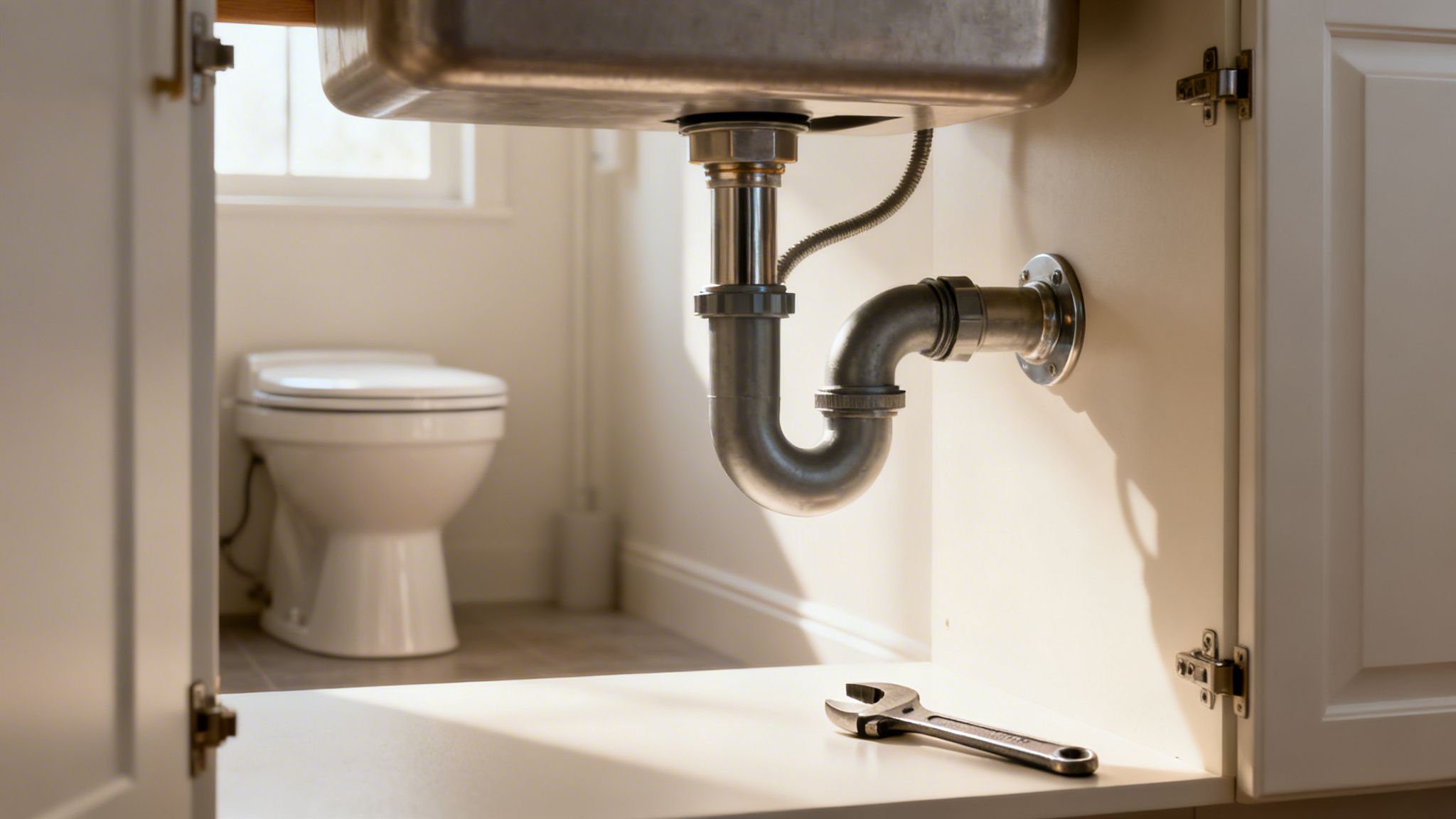
Think of the P-trap as the silent guardian under every sink and floor drain in your house. It’s that U-shaped bend in the pipe you can see right under the sink. Its entire job is to hold a small amount of water at all times. This little plug of water creates a physical barrier that stops sewer gas from creeping up the drain and into your living space.
But here’s the catch: if a drain isn’t used for a long time—like in a guest bathroom or a basement floor drain—this water can evaporate. Once the P-trap runs dry, that protective barrier is gone, leaving an open highway for odors to travel right into your home.
Simple Check: Walk through your house and check every sink, shower, and floor drain. If the septic smell is strongest near one particular drain, especially one you rarely use, a dry P-trap is the most likely cause.
The solution is often incredibly simple. Just run water in the drain for about 30-60 seconds. This refills the trap, restores the water barrier, and can get rid of the odor within minutes.
To help you get started, here’s a quick checklist of common odor sources and their simple fixes.
Common Causes of Septic Odors and DIY Fixes
| Potential Cause | Where to Check | Simple DIY Action |
|---|---|---|
| Dry P-Trap | Guest bathrooms, floor drains, utility sinks, showers you rarely use. | Run water for 30-60 seconds to refill the trap. |
| Loose Toilet | Around the base of any toilet in the house. | Gently try to rock the toilet. If it moves, the wax seal may be broken. |
| Clogged Vent Pipe | The vent pipe exit on your roof. | Safely check for obstructions like leaves, nests, or ice buildup. |
This table covers the basics, but sometimes the problem lies a bit deeper in the system.
The Plumbing Vent: Your System’s Snorkel
Believe it or not, your plumbing system needs to breathe. That’s the whole point of the plumbing vent—a pipe that typically runs through your walls and exits on the roof. It acts like a snorkel, safely releasing sewer gas outside while also regulating the air pressure in your drain pipes.
If this vent gets clogged with leaves, a bird’s nest, or even ice during a rare Dallas freeze, the gas has nowhere to go. Pressure starts to build up, and that gas gets forced back into your home through the nearest drain, causing a widespread septic smell in the house.
The Toilet Wax Ring: A Critical Seal
At the base of every single toilet, there’s a wax ring that creates an airtight and watertight seal between the toilet and the sewer pipe below. Over time, this ring can get old, crack, or get compressed—especially if the toilet becomes loose. When that seal is broken, sewer gas can seep out from around the base of the toilet.
You can check for this problem with a couple of quick tests:
- The Wobble Test: Gently try to rock the toilet from side to side. A properly secured toilet shouldn’t move at all. If it wobbles, the wax ring has likely failed.
- Visual Inspection: Look for any signs of water staining or moisture around the base of the toilet.
When strange smells stick around after you’ve tried these checks, it’s often a red flag for deeper issues. It might be time for a professional sewer line inspection. And if the problem seems too tricky to diagnose on your own, getting a camera inside the pipes is the next logical step. To learn more about what the pros can find, check out our guide on the benefits of a plumbing camera inspection.
The Hidden Dangers of Sewer Gas Exposure
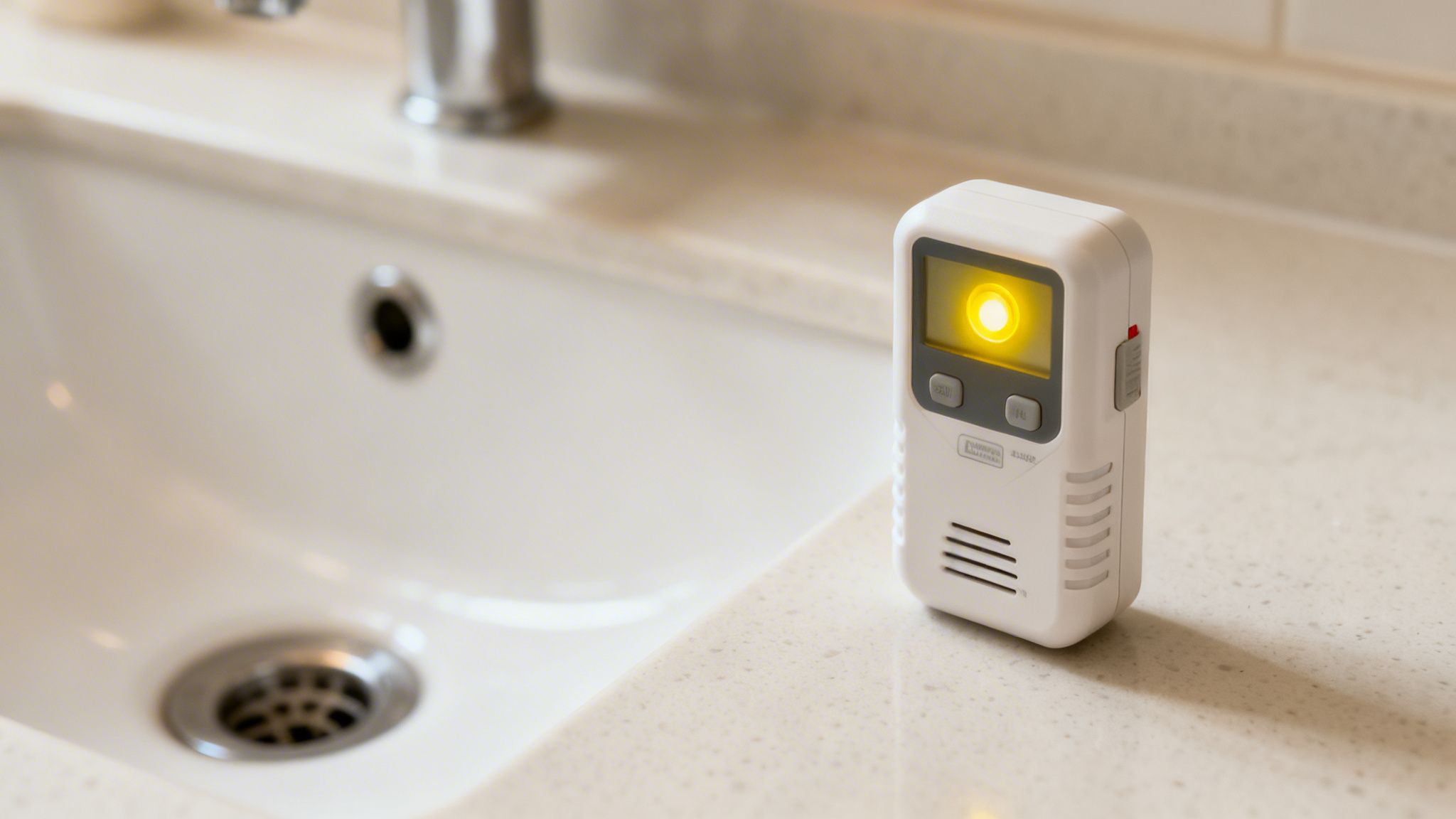
That septic smell wafting through your house is more than just a nuisance—it’s a warning sign. The odor itself is a direct signal that sewer gas is finding its way into your living space, and it’s made of more than just smelly particles. Let’s be clear: this isn’t just about comfort. It’s about your family’s health.
Sewer gas is a cocktail of different gases that form when organic waste breaks down. The main culprit behind that classic rotten-egg smell is hydrogen sulfide. But it’s mixed with other unsavory characters like methane, ammonia, and carbon dioxide. While a faint whiff isn’t typically an emergency, it’s definitely something you shouldn’t ignore.
What Prolonged Exposure Can Do
Even in small doses, these gases can start to wear on you. Continuous exposure to low levels of sewer gas can cause a range of vague symptoms that are easy to brush off.
- Headaches and Dizziness: Do you find yourself dealing with frequent, unexplained headaches? It could be the air quality in your home.
- Nausea and Fatigue: Feeling sick to your stomach or just plain drained for no reason can also be a sign.
- Irritation: You might also notice your eyes, nose, or throat feeling scratchy or irritated.
These symptoms are your body’s way of telling you something is wrong. When a septic system fails, it’s not just gas that’s a problem. Untreated wastewater can back up, posing a serious health risk. In one extreme case, a failing septic system at a restaurant in Wisconsin led to a norovirus outbreak that sickened over 200 people. You can find more details on the risks in this report on septic system failures.
The More Serious Safety Risks
Beyond the immediate health concerns, there’s another danger lurking in sewer gas: methane. It’s a major component of that gas mixture, and in high enough concentrations, it’s extremely flammable and even explosive.
Now, this is a rare scenario in a well-ventilated home. But if you have a significant leak in a confined space like a basement or crawlspace, you could be facing a genuine fire hazard.
Addressing a septic smell isn’t just about getting rid of an annoyance. It’s about protecting your home’s air quality and removing a potential fire hazard. A lingering odor is a clear sign that a professional evaluation is needed to ensure your family’s safety.
If the smell is strong or you’re starting to experience any of these symptoms, you need to act fast. For any situation you feel is urgent, our team is always ready to help with emergency plumbing services.
When DIY Fixes Aren’t Enough
So, you’ve done everything you can think of. You’ve checked the P-traps, made sure the toilet isn’t wobbly, and even gave the roof vent a look from the ground. But that stubborn septic smell in your house just won’t go away.
When your best efforts don’t solve the problem, it’s your system’s way of telling you that the issue is deeper and more complex than a simple DIY fix can handle. Ignoring these persistent signs is a gamble. What starts as just a bad smell can quickly turn into a messy and expensive plumbing emergency. Knowing when to call in a professional is key to protecting your home—and your wallet—from much bigger headaches.
Signs That Point to a Deeper Problem
When the smell is accompanied by other plumbing issues, you’re no longer dealing with a minor glitch. These symptoms are clear signs that a bigger problem is brewing underground, one that requires specialized tools and a trained eye to diagnose and fix. Think of them as red flags you simply can’t afford to ignore.
You should call a professional immediately if you notice:
- Persistent Odors That Don’t Go Away: If you’ve refilled the P-traps and the smell keeps coming back, the source of the gas is somewhere you can’t easily access.
- Gurgling Drains: Ever flush a toilet and hear a gurgling sound from a nearby shower drain? That’s a classic sign of a pressure imbalance, which usually points to a blockage in the main sewer line.
- Slow Draining Fixtures: If multiple drains in your home—sinks, showers, and toilets—are all draining slowly, the problem isn’t a simple clog in one fixture. It’s almost certainly a blockage further down the line.
- Sewage Backups: This one is a no-brainer. Any sign of wastewater backing up into your tubs, showers, or floor drains is an undeniable emergency.
These symptoms often point to serious issues like a full septic tank that needs pumping, a major clog in the main sewer line, or even a failing drain field. These are not problems that can be solved with a plunger or drain cleaner; they require professional intervention.
Why Professional Expertise Is Essential
Diagnosing these complex issues requires more than just a good nose. Licensed plumbers use advanced equipment, like sewer line cameras, to get a clear look inside your pipes without digging up your yard. This technology allows for a precise diagnosis, whether it’s invasive tree roots, a collapsed pipe, or a septic tank that’s just plain full.
For the millions of households with septic systems, regular maintenance is crucial but often gets pushed aside, sometimes due to cost. According to EPA data, of the 21.7 million U.S. households on septic, over half with lower incomes face higher risks because of deferred maintenance. You can find more details in the EPA’s full report on septic system challenges for households.
Trying to fix a main line clog or a failing drain field on your own can easily make things much worse. Professional technicians have the training and the right tools to perform a safe and effective sewer line repair or replacement, ensuring the job is done right the first time.
What to Expect from a Professional Service Call
Calling a plumber can feel a little nerve-wracking, especially when you’re dealing with something as unsettling as a septic smell in your house. You know something’s wrong, but you’re probably not sure what the fix will be or how much it’s going to cost. Knowing what to expect during the service call can help you feel more in control and prepared to make the right call.
When a licensed technician shows up, their first job is to play detective. They’ll start by asking you some questions about the smell—where is it strongest? When do you notice it most? Have you seen any other plumbing issues? This initial chat gives them crucial clues to start their investigation.
The Diagnostic Process
After getting the lay of the land from you, the technician will get hands-on. They’ll start with the simple stuff first, checking common culprits like P-traps under your sinks and the wax seals on your toilets. It’s all about ruling out the easy fixes before digging deeper.
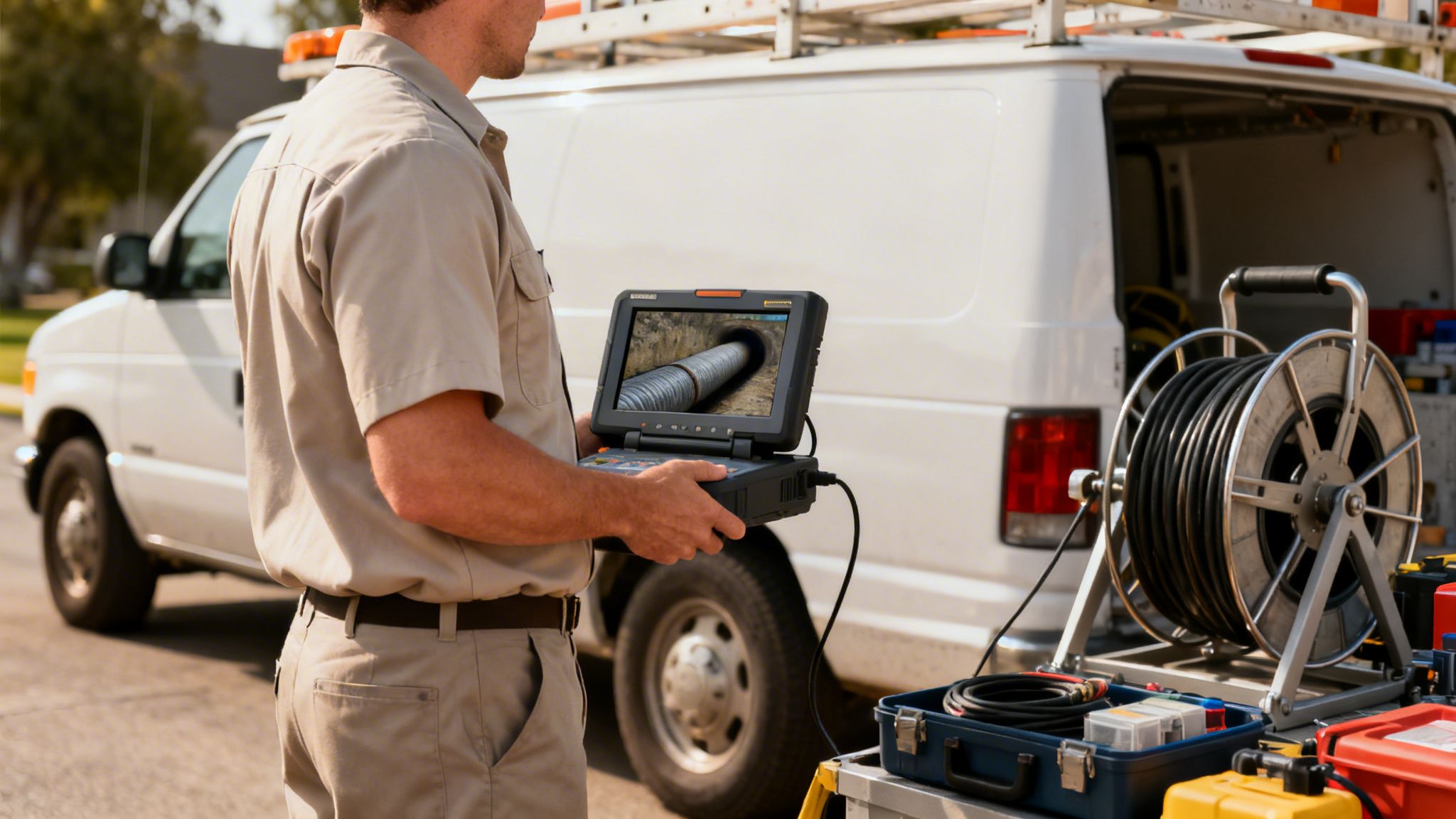
If the source isn’t obvious, they’ll bring out the specialized tools. For those stubborn, hidden issues, a sewer line camera inspection is usually the next move. A technician will feed a flexible, high-resolution camera down your pipes, giving them a live video feed of what’s happening inside. This is a game-changer for finding things like:
- Blockages: From years of grease buildup to pesky tree roots that have worked their way in.
- Pipe Damage: Cracks, collapsed sections, or “bellies” in the sewer line where wastewater is pooling.
- Septic Tank Issues: Problems with the tank’s baffles or the connections leading to and from it.
This camera inspection pinpoints the exact location and nature of the problem without having to dig up your yard. That saves a ton of time, guesswork, and money.
By visually confirming the issue, a professional can offer a precise solution instead of relying on guesswork. This means you get an accurate diagnosis and a targeted repair plan from the very start.
Common Professional Solutions
Once the diagnosis is complete, the technician will walk you through what they found and present you with clear solutions. Before any work starts, it’s a good idea to check if your homeowners insurance covers sewer backup, since many standard policies have specific exclusions for these kinds of problems.
Depending on what’s causing the septic smell in your house, here are a few services they might recommend:
- Septic Tank Pumping: If the inspection shows your tank is full, the most straightforward fix is to have it pumped. This is just routine maintenance, but it will immediately take care of any odors caused by an overfilled system.
- Hydro Jetting: For nasty clogs from grease, sludge, or tree roots, hydro jetting is the best tool for the job. It uses high-pressure water jets to blast the inside of your pipes clean, clearing away years of buildup far better than a simple drain snake ever could.
- Pipe Repair or Replacement: If the camera finds a cracked, broken, or collapsed pipe, a targeted repair is the only way to stop sewer gas from leaking out and stinking up your home.
Any reputable professional will give you an upfront quote and clearly explain each option. That way, you have all the information you need to choose the best path forward for your home.
Proactive Maintenance to Prevent Future Septic Smells
The best way to deal with a septic smell in your house is to make sure it never happens in the first place. When you shift from a reactive mindset to a proactive one, you’re not just keeping your home smelling fresh—you’re protecting your property from messy, expensive emergencies. A simple, consistent maintenance plan is your best defense.
Think of your septic system like your car; it needs regular check-ups to run smoothly for years to come. If you neglect it, you’re just waiting for a breakdown. The cornerstone of any good maintenance plan is a regular pumping schedule. Most systems here in the eastern Dallas area need pumping every 3-5 years, but that can change depending on your tank size and how much water your household uses.
Creating Your Maintenance Checklist
A healthy septic system relies on more than just pumping. Your daily habits play a massive role in its longevity. The key is protecting the delicate balance of bacteria inside your tank, which is essential for breaking down solid waste efficiently.
Here are a few key habits to get into:
- Be Mindful of What You Flush: Your toilet isn’t a trash can. The only things that should ever go down are human waste and septic-safe toilet paper. Items like wipes (even the “flushable” ones), paper towels, and hygiene products will cause clogs every time.
- Use Water Wisely: Every single gallon of water you use ends up in your septic tank. Spreading out laundry loads throughout the week, installing efficient fixtures, and fixing leaks reduces the strain on your system. This also helps prevent the drain field from getting oversaturated.
- Choose Septic-Safe Products: Harsh chemical cleaners, bleach, and antibacterial soaps can kill the beneficial bacteria your system needs to function. Stick to products specifically labeled as “septic-safe.”
A proactive approach puts you in control of your home’s health. Simple, consistent habits are far less stressful and costly than dealing with a full-blown system failure and the nasty odors that come with it.
Protecting Your Drain Field and Your Investment
Your drain field is the final, critical stage of your septic system, and it also happens to be the most expensive part to replace. Keeping it healthy is non-negotiable. This means never parking cars on it, avoiding planting trees or shrubs nearby whose roots can cause serious damage, and diverting rainwater from your gutters away from the area.
Delaying maintenance often comes down to cost, which is a big hurdle for many homeowners. Septic pumping can now cost $500+, and a full system replacement can run into the tens of thousands, putting a heavy burden on a family’s budget. This is especially true for landlords in Hunt County or real estate agents who need inspections, where being proactive prevents major liabilities down the road. You can discover more insights about the reality of septic system costs and climate impacts here.
For an even deeper clean that keeps your pipes clear and prevents buildup before it turns into a problem, you might also want to check out our guide on hydro jet drain cleaning in Lone Oak.
Got Questions About Septic Smells? We’ve Got Answers.
When a foul septic odor shows up uninvited, it’s natural to have a lot of questions. We hear from homeowners across eastern Dallas dealing with this exact problem, and most of them share the same concerns. Let’s clear the air and tackle some of the most common questions we get.
Is It Normal to Smell Septic Odors Every Once in a While?
Absolutely not. A septic system that’s working the way it should will never produce odors inside your home. Even a faint, occasional whiff is a red flag that something’s off.
Think of it as a warning light on your car’s dashboard. Ignoring it won’t make the problem go away—it just gives a small issue time to grow into a much bigger, messier, and more expensive headache.
Can’t I Just Pour Some Septic Tank Additives Down the Drain?
While it sounds like a quick fix, septic additives almost never solve the real problem. The truth is, a septic smell in your house isn’t usually a chemical issue; it’s a mechanical one. The odor is typically a symptom of something physical, like a dried-out P-trap, a full tank needing a pump-out, or a blocked vent pipe.
Chemicals just can’t repair a physical blockage or a mechanical failure. It’s better to save your money and figure out what’s actually going on.
So, Will Pumping My Tank Get Rid of the Smell for Good?
Pumping the tank will only solve the odor problem if a full tank is the one and only cause. If the smell is coming from a struggling drain field, a crack in a pipe somewhere, or a clogged plumbing vent, pumping the tank won’t make a bit of difference.
The only way to know for sure what’s causing the stench is to have a professional take a look. They can diagnose the true source of the problem and recommend the right fix.
Tired of playing the guessing game with your septic system? Let the team at On The Way Plumbing Leak Specialist pinpoint the exact cause of the odor. Schedule your professional septic inspection today and get back to enjoying a fresh, comfortable home.