

To prevent frozen pipes this winter, you really have to get ahead of the problem. It’s all about a proactive game plan that combines good insulation, smart air sealing, and keeping water moving.
Simple things like insulating pipes in your attic, letting faucets drip when a freeze warning hits, and sealing up drafts can save you from a catastrophic burst pipe and the expensive water damage that follows. This is especially true for homes around here that just weren’t built for extreme cold.
Why Dallas Homes Are Uniquely Vulnerable to Frozen Pipes
The nightmare of walking into a flooded room after a winter storm became a harsh reality for so many of us during that infamous 2021 Texas freeze. If that event taught us one critical lesson, it’s this: Dallas-area homes are uniquely susceptible to frozen pipes because they simply weren’t constructed with prolonged, deep freezes in mind.
Unlike homes in northern climates where sub-zero temperatures are the norm, our houses often have major gaps in their insulation. This leaves plumbing in certain areas dangerously exposed when the temperature plummets.
High-Risk Zones in a Texas Home
When a sudden cold front pushes temperatures below freezing, specific parts of your home become immediate liabilities. These are the spots where pipes are almost guaranteed to freeze first:
- Attics and Crawl Spaces: These unheated areas can get nearly as cold as the outside air, putting any water lines running through them at extreme risk.
- Exterior Walls: Any pipes located within walls that face the outdoors have very little protection from the dropping temperatures.
- Garages: An uninsulated garage offers minimal defense against the cold, making plumbing for laundry sinks or water heaters a primary concern.
This common construction style is a huge reason why knowing how to prevent frozen pipes is so crucial for local homeowners. A sudden temperature drop can quickly turn into a plumbing disaster. If you’re concerned about your home’s plumbing, our team provides expert leak detection services in Dallas to help identify those vulnerable spots before they become a problem.
The vulnerability of southern homes isn’t just an anecdote; it’s a statistical reality. A single burst pipe can release hundreds of gallons of water per day, and the resulting damage often costs thousands to repair.
The financial toll of these events is staggering. In fact, Texas consistently ranks among the top 10 states for insurance claims related to frozen pipe incidents. National studies have shown that claims for this type of damage have exceeded $628 million in a single year, which really highlights just how common—and costly—this preventable issue can be. Protecting your property starts with understanding these unique local risks.
Your Proactive Winter Plumbing Checklist
The absolute best defense against a burst pipe is preparing long before the temperature even thinks about plummeting. A proactive game plan is your most powerful tool in the fight against frozen plumbing, and it can save you thousands in water damage repairs.
This isn’t just a list of chores; think of it as your strategic guide to fortifying your home against the harsh realities of a Dallas winter freeze. By taking these concrete steps, you can head into the colder months with peace of mind, knowing you’ve drastically reduced the risk of a catastrophic plumbing emergency.
Start with Your Home’s Exterior
Your first line of defense begins outside. Any exposed plumbing is a direct invitation for frigid air to wreak havoc. Start by systematically walking your property and addressing every point of vulnerability.
- Disconnect and Drain Garden Hoses: This one is non-negotiable. A hose left connected traps water that will freeze, expand, and exert immense pressure back into the pipe inside your wall. It’s one of the most common—and easily avoidable—causes of a burst pipe.
- Install Insulated Faucet Covers: Every single exterior spigot needs a foam faucet cover. You can find them at any hardware store for just a few bucks. They are incredibly easy to install and create an essential thermal barrier against the biting wind.
Once your hoses are put away and faucets are covered, take a slow walk around the perimeter of your foundation. Look for any small cracks or gaps where utility lines enter the house. Sealing these up with caulk or expanding foam spray is a small step that pays off big by preventing cold drafts that can chill nearby indoor pipes.
Insulate High-Risk Interior Zones
Now, let’s head inside to the areas that plumbers see cause the most trouble: attics, crawl spaces, and unheated garages. Pipes running through these unconditioned spaces are at the highest risk. Your simple goal here is to keep the water inside them from ever reaching that critical 32°F mark.
The scale of this problem is massive. Nationwide, around 250,000 homes are damaged each year from frozen pipes. Even a tiny one-eighth-inch crack can unleash up to 250 gallons of water a day, turning a small issue into a full-blown flood in no time.
Insulating pipes with pre-formed foam sleeves or foil-faced fiberglass wraps is a cheap and highly effective solution. It’s a weekend project that can save you a world of hurt.
Your plumbing system is like the circulatory system of your home. Just as you’d wear a coat to protect yourself from the cold, your pipes need their own layer of protection to function properly during a deep freeze.
Choosing the right insulation is key. For long, straight, easy-to-access pipes in a basement or crawlspace, foam pipe sleeves are perfect. For pipes with lots of bends or in tight spots, fiberglass wraps offer a lot more flexibility. Both work by trapping the ambient heat from your home around the pipe, keeping the water inside just warm enough.
Put It All Together: Your Checklist for Success
To make this even easier, we’ve organized these tasks into a simple checklist. Run through this before the first freeze warning hits, and you’ll be in great shape.
Pre-Winter Pipe Protection Checklist
| Location | Action Item | Pro Tip |
|---|---|---|
| Outside | Disconnect, drain, and store all garden hoses. | Don’t just disconnect—make sure you let the hose fully drain so it doesn’t crack over the winter. |
| Outside | Install insulated covers on all exterior spigots. | Keep the covers on all winter, even on milder days. A surprise cold snap can happen fast in Texas. |
| Outside | Seal cracks and holes in the foundation. | Pay special attention to areas where cable, gas, or electrical lines enter the house. |
| Inside | Insulate pipes in unheated areas (attic, garage, crawl space). | For a little extra protection, you can also use thermostatically controlled heat tape on the most vulnerable pipes. |
| Inside | Keep garage doors closed as much as possible. | This traps any residual heat and keeps cold winds from directly hitting your plumbing. |
| Inside | Locate and test your main water shut-off valve. | Make sure everyone in the house knows where it is and how to turn it off in an emergency. It could save your home from major water damage. |
Running through this checklist doesn’t take long, but the protection it offers is invaluable. It’s the kind of preventive maintenance that separates a calm winter from a chaotic one.
Final Checks and Long-Term Maintenance
Beyond these immediate fixes, it’s smart to think about the long-term health of your entire plumbing system. Consistent maintenance ensures your pipes and fixtures are resilient year-round. For example, a healthy water heater is a key part of a robust system, and our guide on seasonal water heater maintenance has some great tips.
As you finish up, I’ll say it again because it’s that important: know where your main water shut-off valve is located. If a pipe does burst, shutting off the water supply immediately is the single most critical action you can take to minimize the damage while you wait for help to arrive.
Immediate Actions During a Freeze Warning
When a freeze warning hits the Dallas area, it’s your signal to spring into action. This isn’t about starting a big project; it’s about taking a few quick, smart steps that can mean the difference between waking up to a normal morning and dealing with a full-blown plumbing disaster. Think of it as putting your home’s plumbing on high alert—these next few hours are critical.
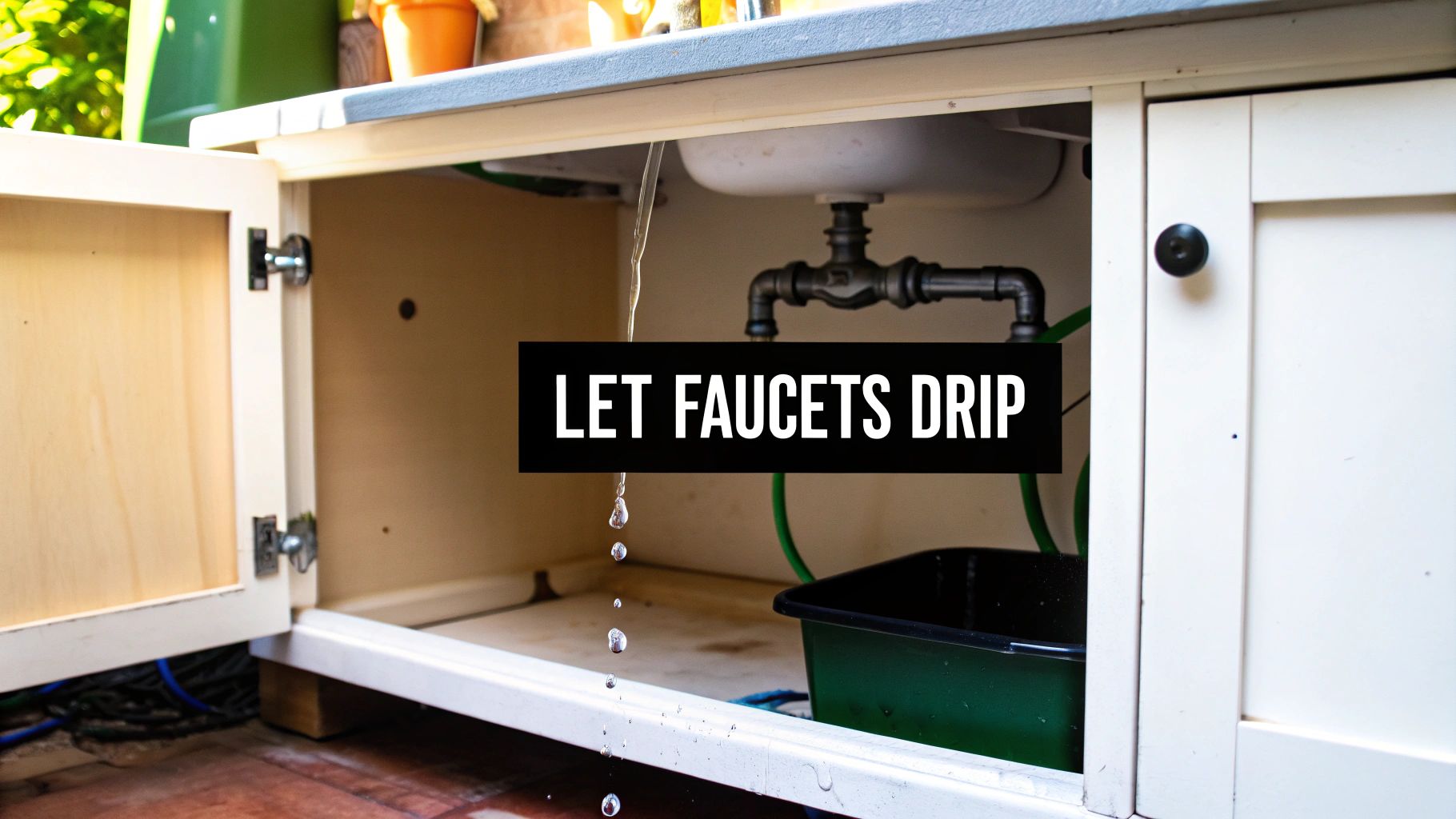
The classic advice is to let your faucets drip, but most people don’t really get why it works. It has less to do with the water’s temperature and everything to do with constant movement. Standing water is what freezes, expands, and ultimately bursts a pipe. A tiny, consistent flow keeps ice from forming and stops that dangerous pressure from building up.
Implement a Strategic Drip
Don’t just head to the nearest sink and turn the handle. You need to be a little more strategic. Pinpoint the faucets connected to your most vulnerable pipes—usually the ones on exterior walls or running through a chilly crawl space.
- Set the Right Flow: A steady, slow drip is all you need, about the thickness of a pencil lead. You’re not trying to run a stream, just create enough movement to relieve any building pressure.
- Use Both Taps: Here’s a common mistake: only dripping the cold water. Your hot water lines can freeze just as easily. Make sure to let both the hot and cold taps drip.
Honestly, this simple step is one of the most effective things you can do when a cold snap catches you off guard.
The point of dripping faucets isn’t to waste water; it’s to create an escape valve. That moving water actively relieves the intense pressure building up between an ice blockage and your closed faucet—which is the real reason pipes burst.
Let the Warm Air Circulate
Here’s another incredibly simple but powerful trick: use your home’s existing heat to your advantage. Just open up the cabinet doors under your kitchen and bathroom sinks. This is especially important for any sinks on an outside wall.
Doing this lets the warmer air from your house circulate around the pipes, giving them a much-needed buffer against the cold seeping through the wall. It’s a zero-cost move that can dramatically lower the risk of a freeze.
Finally, fight the urge to dial down your thermostat overnight just to save a few bucks. The tiny savings on your heating bill aren’t worth the risk of a thousand-dollar plumbing repair. Keeping your home at a steady, consistent temperature—even if it’s just 55°F—is key to protecting your entire system.
If you do find yourself facing a plumbing crisis despite your best efforts, your next critical step is knowing who to call for reliable emergency plumbing services.
How to Safely Thaw a Frozen Pipe
You turn on the faucet, expecting a steady stream of water, but all you get is a weak trickle—or maybe nothing at all. This is the classic, tell-tale sign of a frozen pipe. Don’t panic, but now is the time to act fast before that ice blockage causes the pipe to burst.
First thing’s first: you have to play detective and find the frozen section. Start with the most likely culprits, which are always pipes in unheated spaces like attics, crawl spaces, garages, or those running along an exterior wall. A visible layer of frost is a dead giveaway, but sometimes the freeze isn’t so obvious. You can often find it by carefully running your hand along accessible pipes; the frozen area will feel significantly colder than the rest.
Gentle and Safe Thawing Techniques
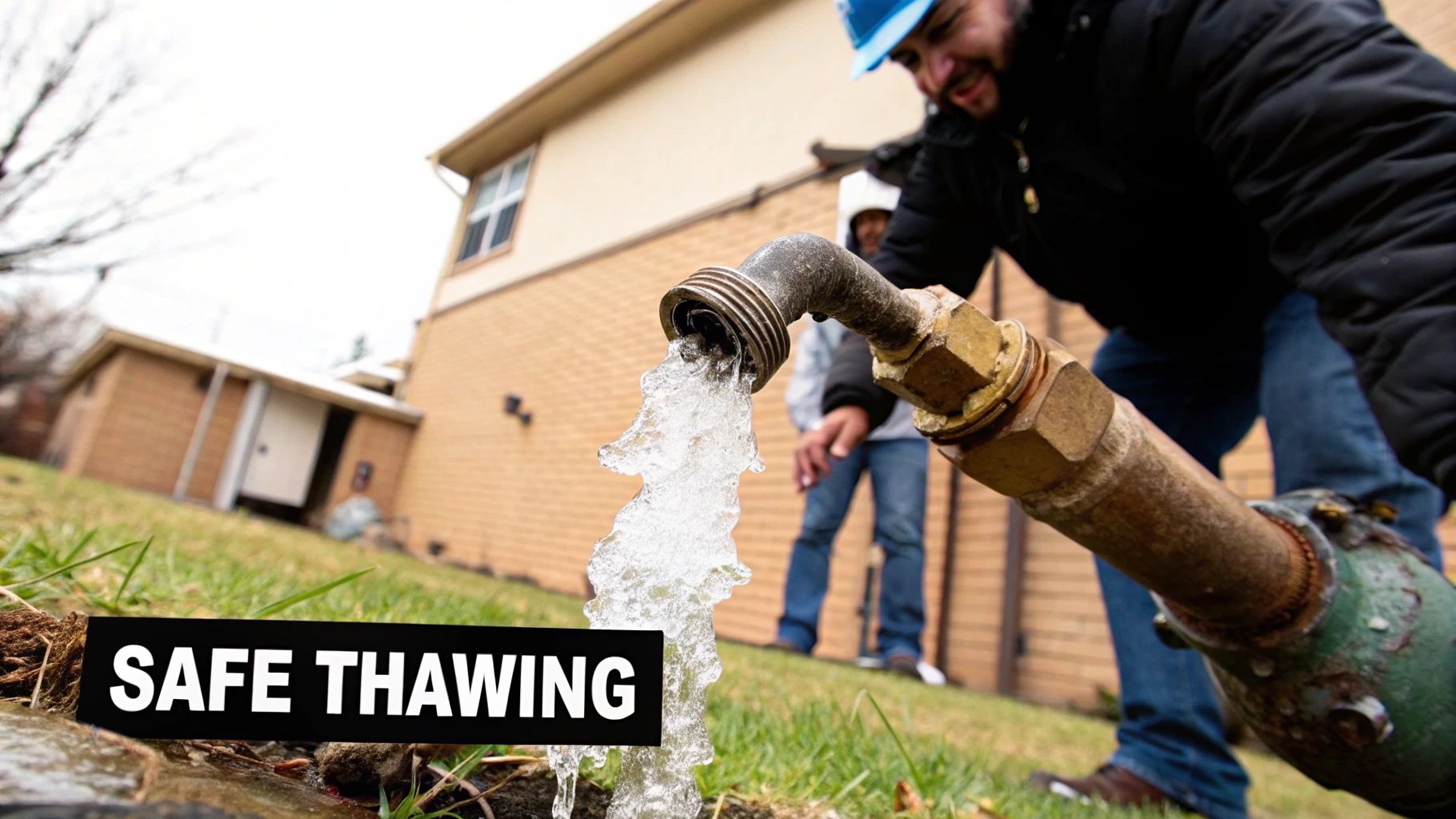
Once you’ve pinpointed the ice blockage, the key is to thaw it gently. Blasting it with high heat can shock the pipe, causing it to crack or even explode from the rapid pressure change. The goal here is a gradual warm-up of the pipe and the ice inside.
Before you start, open the faucet that the frozen pipe leads to. This is an absolutely critical step. As the ice begins to melt, the running water will help speed things along. More importantly, it gives the expanding water and steam an escape route, relieving the immense pressure that builds up inside a sealed pipe.
Here are the safest DIY methods to try:
- A Hairdryer: Grab a standard hairdryer and set it to a low or medium setting. Keep it moving back and forth along the frozen section. Never just point it at one spot and leave it.
- Warm Towels: Soak a few towels in warm (not boiling) water, wring them out, and wrap them snugly around the pipe. You’ll need to replace them as they cool down, but it’s a safe and effective trick.
- Electric Heat Tape: You can find this at most hardware stores, and it’s made specifically for this job. It applies a steady, low-level heat directly to the pipe, which is exactly what you want.
We can’t stress this enough: Never, under any circumstances, use an open flame to thaw a pipe. That means no blowtorches, propane heaters, or anything similar. It’s an extreme fire hazard and can instantly damage the pipe, turning a small plumbing problem into a full-blown catastrophe.
When to Immediately Shut Off the Water
There’s a point where a DIY approach is no longer the right answer. If you run into any of these situations, your very next move should be to find your home’s main water shut-off valve and turn it off completely.
- The frozen section is behind a wall where you can’t access it.
- You’ve been applying gentle heat for a while, but the water flow just isn’t coming back.
- You see any sign that the pipe is already cracked, bulging, or actively leaking.
Once the main water is off, your next call should be to a professional. An expert from On The Way Plumbing Leak Specialist can safely handle hidden freezes and repair any damage before you turn the water back on, saving you from a potential flood.
Knowing When to Call a Professional Plumber
While it’s tempting to handle minor plumbing issues yourself, a frozen pipe can escalate far beyond a simple DIY fix. There are certain situations that are clear signals it’s time to put down the hairdryer and pick up the phone.
Making the call to a professional isn’t admitting defeat. It’s about protecting your home from the massive, expensive water damage a burst pipe can unleash in minutes.
Trying to thaw a pipe you can’t see or reach is a huge gamble. If the frozen section is hidden behind drywall, tucked away in a cramped crawl space, or you just aren’t sure where the ice blockage is, calling an expert is your safest move. A licensed plumber has specialized tools you simply don’t have in your garage.
For instance, they can use thermal imaging cameras to pinpoint the exact location of a freeze without tearing into your walls. This tech saves a ton of time, prevents unnecessary damage, and lets them get straight to the source of the problem.
Red Flags That Demand a Professional
Knowing when you’re out of your depth is key to avoiding a catastrophe. If you run into any of these scenarios, your very next step should be to shut off your home’s main water supply and call for help.
- The Pipe Has Already Burst: If you see a visible crack, a weird bulge in the pipe, or water is actively leaking, it’s already an emergency.
- No Water After Thawing Attempts: You’ve been applying gentle, safe heat for a while, but the faucet is still dry. This could mean the blockage is more severe than you thought or there’s another problem further down the line.
- The Freeze is Inaccessible: The frozen pipe is inside a wall, ceiling, or another spot you can’t safely get to.
A great plumber does more than just fix the immediate problem. They figure out why the pipe froze in the first place and give you long-term solutions to stop it from happening again. This might involve rerouting pipes, improving insulation, or installing heat tape in those stubborn problem areas.
The On The Way Plumbing Advantage
When you call On The Way Plumbing Leak Specialist, you’re not just getting a quick fix. Our experienced technicians show up with the right tools and know-how to handle the crisis safely and efficiently. We’ll resolve the immediate threat and give you expert recommendations to fortify your home against future freezes.
For homeowners in Lone Oak and the eastern Dallas area, having a trusted plumber on call provides serious peace of mind. We understand the unique weak spots in Texas homes during a cold snap and know exactly what it takes to prevent frozen pipes. Don’t wait for a small problem to turn into a full-blown disaster—let our team provide a solution that lasts.
When you need a professional you can trust to protect your home from winter plumbing disasters, call On The Way Plumbing Leak Specialist. For expert leak detection, emergency repairs, and long-term prevention strategies in the greater eastern Dallas area, visit us online to schedule your service.
Short Questions and Answers
What are the easiest ways to prevent frozen pipes?
The simplest steps are insulating exposed pipes in areas like attics and crawl spaces, disconnecting outdoor hoses, covering exterior faucets, and letting indoor faucets drip slowly during a freeze warning.
How can I tell if a pipe is frozen before it bursts?
The most common signs are a sudden drop in water pressure, no water coming out of a faucet at all, or visible frost on the outside of a pipe.
Is it really necessary to drip both hot and cold water taps?
Yes, absolutely. Both hot and cold water lines are equally vulnerable if they pass through unheated spaces. Dripping both ensures water is moving through the entire system, relieving pressure in all pipes.
What is the single most important thing to do if a pipe bursts?
Immediately locate and shut off your home’s main water supply valve. This stops the flow of water and is the most critical step to minimizing catastrophic water damage while you wait for a plumber.