
HomePlumbing ServicesLeak Detection and Repair
Leak detection in Lone Oak, TX and Hunt County
Water Leak Detection and Repair in Lone Oak, TX
A water bill that jumps for no reason, a warm spot on the floor, a patch of yard that never dries out. Those are leaks, and our water leak detection finds where they are before anyone starts cutting into floors, walls or concrete. We're On The Way Plumbing Leak Specialist, family owned in Lone Oak, and finding leaks is the work we're named for.
- 5.0 on Google from 354 reviews
- Texas license M-44817
- Family owned in Lone Oak, TX
- Free estimates, upfront pricing
- Emergency plumbers on call 24/7
Water leak detection that finds the leak before anything gets opened up
Most leaks don't show themselves. The pipe is under a slab, behind drywall, in a crawlspace or two feet down in the yard, and the only clue is a water bill that keeps climbing or a sound you can't place. The expensive mistake is guessing. If somebody starts breaking concrete or pulling up flooring on a hunch, you pay for the guess and then you pay again when it's wrong.
Our job on a leak call is to find the leak first, then talk about fixing it. We confirm there really is a leak, figure out which line it's on, and narrow it down to a spot before we open anything. Doing it in that order means a smaller hole, less patching afterward and a repair bill closer to what it should be. The old line on our site still holds up: we find it without tearing up your property any more than the repair needs.
We've been doing this for more than 13 years in the plumbing industry, and the leak specialist part of our name is there on purpose. We handle leaks in homes and businesses across Hunt County, Rains County and the towns around them, including slab leaks under concrete foundations, yard leaks on the main line, and the drip behind the wall that's been going for months.
Signs of a hidden water leak in your house or yard
A hidden water leak usually gives off a few small signals before it does real damage. If you notice two or more of these, it's worth a call or a text.
Your water bill jumped and your habits didn't
Compare this month to the same month last year. A steady climb with no new pool, no new garden and no houseguests is one of the most common ways people find out water is going somewhere it shouldn't.
You hear running water with everything off
A faint hiss or trickle in a wall, under the floor or near the water heater at night, when the house is quiet, usually means a pressurized line is leaking.
A warm spot on the floor
Tile or concrete that feels warm in one area often points to a hot water line leaking under the slab.
A soggy spot or extra green strip in the yard
When one patch stays wet in dry weather, or the grass over the path between the meter and the house is greener than the rest, the main water line is the usual suspect.
Low water pressure that came on gradually
A leak steals pressure from everything downstream. If showers and faucets all got weaker at once, a leak on the main or a branch line is a likely cause.
Stains, cupped flooring or a musty smell
Brown rings on drywall or ceilings, wood floors that start to cup, baseboards that swell and a musty smell in one room all mean water has been sitting where it shouldn't for a while.
Do the water meter test before you call
- Turn off every faucet, shower, ice maker, sprinkler and the washer. Make sure no toilet is refilling.
- Find your water meter (usually in a box near the street or road) and look for the small leak indicator dial, often a little triangle or star.
- If the indicator is spinning, water is leaving the pipes somewhere. If it isn't spinning, write down the numbers on the meter, wait an hour without using any water, and check again.
- If the numbers moved, you have a leak. Call or text (903) 458-4026 and tell us what you saw. A photo of the meter helps.
How our leak detection plumber finds the leak
People ask how plumbers find leaks they can't see. It's a process of elimination, done in order, so we're not opening anything until we know where to open it. Here's what a leak detection visit from our crew looks like.
We ask questions and look at the history
When did the bill go up? Is the house on a slab or pier and beam? Any foundation work, remodels or new appliances lately? Has anyone else looked at it? Your answers tell us where to start.
We confirm the leak and pressure test the lines
We check the meter, then put gauges on the system and run a pressure test. If the gauge drops with everything shut off, a line is losing water. Customers have watched our guys catch a leak because a pressure gauge moved just a little, and that small movement is the whole point of testing carefully.
We isolate the leak to one line
Next we separate the system: the main line from the house, the hot side from the cold side, one branch from another. Shutting off and testing sections one at a time lets us isolate the leak to a single run of pipe instead of the whole house.
We listen for the leak and narrow it down
Once we know which line is leaking, we trace its route and listen for the leak along it. Water escaping a pressurized pipe makes noise, and it gets louder as you get closer. Plumbers use listening equipment, line tracing and moisture checks to narrow it down to a spot. For drains and sewer lines, we use a camera inspection to see inside the pipe instead.
We show you what we found and give you repair options
Before any work starts, we explain where the leak is, what caused it if we can tell, and the repair options that fit your house. You get the cost up front. Our customers say this part matters most: no surprises and no being sold things you don't need.
Types of leaks we find and fix
Leak detection covers a lot of ground, literally. The approach changes depending on where the pipe runs, so here's how we handle the common ones.
Slab leaks under the foundation
A slab leak is a break in a water line running under the concrete. These are the hardest to find and the most important to pinpoint, since every extra foot of concrete you break costs money. See our page on slab leak detection and repair for the full rundown on signs and repair choices.
Water line leaks in the yard
The main water line runs from the meter to the house, and a leak there shows up as a soggy spot, low pressure or a meter that never stops. We find the spot and dig only where we need to. Our water line repair and replacement page covers when to fix a section and when to replace the line.
Leaks under the house in a crawlspace
Pier and beam houses hide their plumbing in the crawlspace, where a drip can soak the ground and rot the subfloor for months before anyone notices. We crawl it, trace it and fix it. Kathy L. called us on a weekend for a leak under the house and wrote: "...for under the house leak detection and repair. In and out within an hour."
Leaks inside a wall or ceiling
A ceiling leak or a stain spreading down a wall usually comes from a supply line, a shower valve or a drain above. We track it to the source and open the smallest section of drywall we can. We also take before and after pictures so you can see what was wrong and what we did.
Fixture and appliance leaks
Not every leak is a buried pipe. Refrigerator ice maker lines, dishwasher connections, washer hoses, toilet supply lines and angle stops all leak too. One homeowner called us to uncover a leak, and it turned out to be coming from the fridge. Finding the simple answer first is part of doing this right.
Gas leaks and sewer leaks
We also find and repair gas leaks and sewer line leaks. If you smell gas, leave the house first and call 911 or your gas company from outside, then call us. Read more on our gas line repair page, and our sewer camera inspection page for drain and sewer problems.
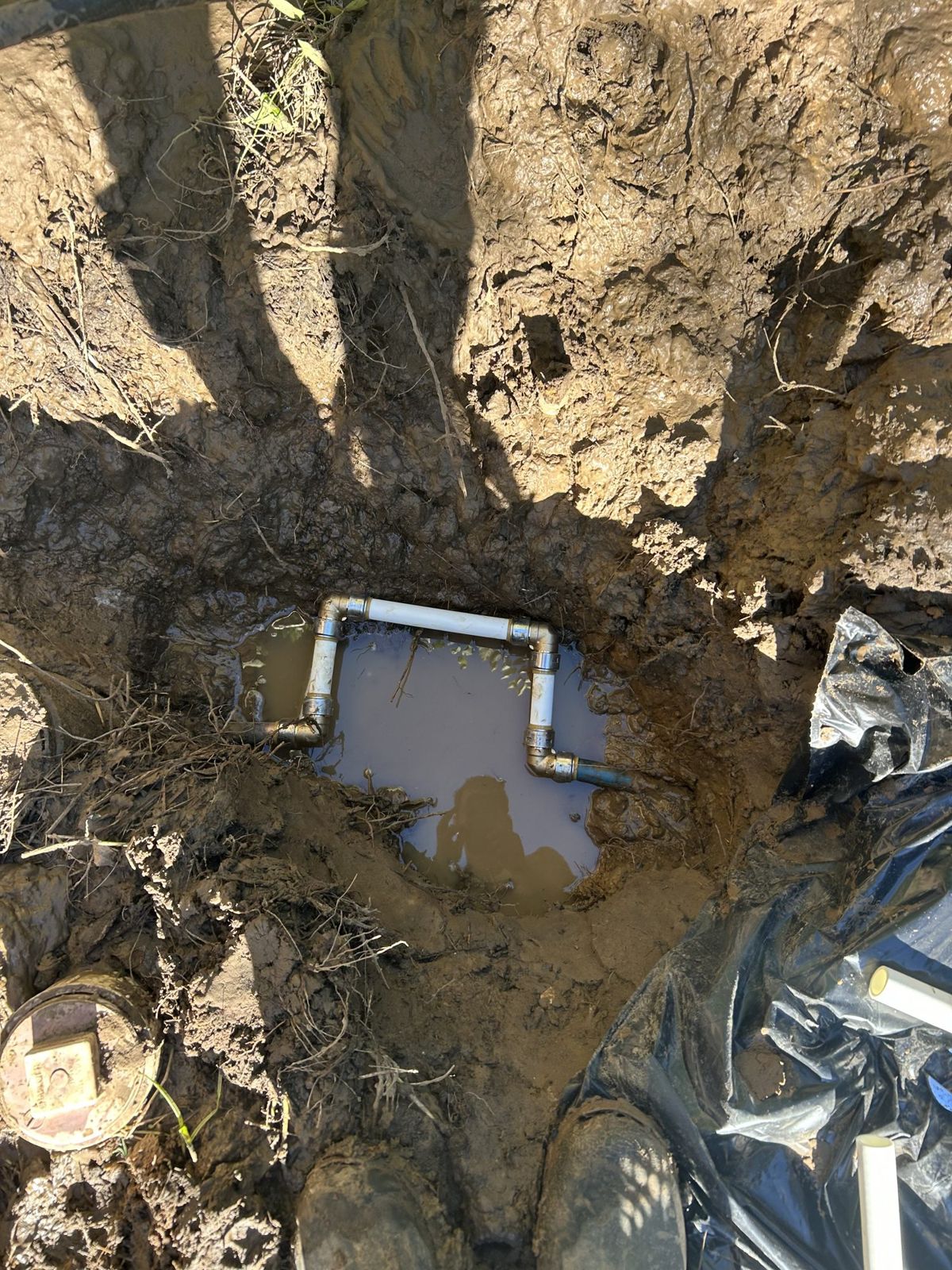
A PVC water line repaired with new couplings after we pinpointed the leak and dug one small trench.
What people said after we found their leak
★★★★★
"We had different plumbers out and the problem was not ever found. On The Way found the problem fast and was very reasonable on price."
Lenni L. · Google review
★★★★★
"Upfront, guaranteed quote (extremely reasonable for emergency weekend rate) for under the house leak detection and repair. In and out within an hour."
Kathy L. · Google review
★★★★★
"He was able to detect a small leak after we had foundation repair completed and gave us different options that would work best for us."
Ian & Michelle N. · Google review
★★★★★
"They were able to diagnose and repair a water leak in our backyard brick column. Their precision reduced the amount of repair masonry needed."
Brian S. · Google review
What leak detection costs compared to the repair
There are two parts to any leak job: finding the leak and fixing the leak. They're priced differently because they're different kinds of work. Finding it is diagnostic time, testing and tracing. Fixing it is materials, digging or cutting, the repair itself and putting things back. What leak detection costs depends on how big the system is and how hidden the leak is, and we tell you the price before we start.
Here's what moves the price on the repair side:
- Where the leak is. A leak at an exposed fitting under a sink is quick. A leak under a slab or behind tile takes more labor to reach.
- How you get to it. Concrete, tile, brick, finished walls and deep yard lines all add work. Pinpointing the leak first keeps that work small. One customer told us our precision cut down on the masonry repair he needed.
- Fix the spot or reroute the line. Sometimes running a new line around the problem costs less than digging to it.
- Pipe material and age. Old galvanized or brittle pipe may not hold a patch, and that changes the plan.
- After hours or weekends. Emergency calls on nights and weekends can carry a different rate than a scheduled weekday visit.
We give free estimates on repair work, and our techs explain the cost before they start, with more than one option when there is one. If a bigger repair isn't in the budget right now, ask about financing. For more detail on the slab side, read our breakdown of what slab leak detection costs.
When one leak turns into a pattern
Fixing one leak is normal. Fixing the third one in two years on the same type of pipe is a sign the pipe itself is the problem. Old galvanized steel rusts from the inside, gray polybutylene gets brittle, and some copper develops pinhole leaks that pop up one after another. At that point, every repair is a patch on a system that's wearing out.
When we see that pattern, we'll tell you, and we'll show you why. Sometimes the right call is replacing one section. Sometimes it's whole home repiping, which ends the cycle of leak calls for good. You decide, and we give you the numbers on both.
High water pressure is another cause we find a lot, especially on newer homes. Pressure that runs well above normal strains every pipe, fitting and supply line in the house. We had one customer on newer construction whose pressure was reading 110 psi. A pressure reducing valve fixes that, and it's a lot cheaper than chasing leaks. If a pipe has already split, our burst pipe repair page covers what to do first.
Leak detection in Lone Oak, TX and nearby towns
We're based on Rains County Road 1610 in Lone Oak, and we handle leak detection across Hunt County and Rains County, plus nearby towns in Hopkins, Wood and Rockwall counties. Our service area runs about a 60-mile radius around Lone Oak. If you're in Greenville, our Greenville leak detection page has local details.
Office hours are Monday through Saturday from 7 AM to 11:30 PM and Sunday from 9 AM to 9 PM, and we have plumbers on call 24/7 for emergencies. We offer same-day service whenever possible, and Erin in the office will tell you straight what the schedule looks like when you call.
If you're searching for leak detection near you and you're anywhere around Lone Oak, call or text (903) 458-4026.
Leak Detection and Repair around Hunt and Rains counties
We handle leak detection and repair for homes and businesses in Lone Oak and the towns around it, about a 60-mile radius from our shop. Pick your town below to see how we work there, or see all of our service areas.
Common questions
Think you have a leak? Let's find it.
Call or text (903) 458-4026 and tell us what you're seeing. A photo of the stain, wet spot or water meter helps us plan the visit.