
HomePlumbing ServicesWater Line Repair and Replacement
Water line repair in Lone Oak and Hunt County
Water Line Repair and Replacement from the Meter to Your House
A soggy spot in the yard, a meter that never stops spinning or pressure that keeps dropping usually means trouble on the main line. We handle water line repair and full line replacement for homes and businesses around Lone Oak, finding the leak first so we only dig where we need to.
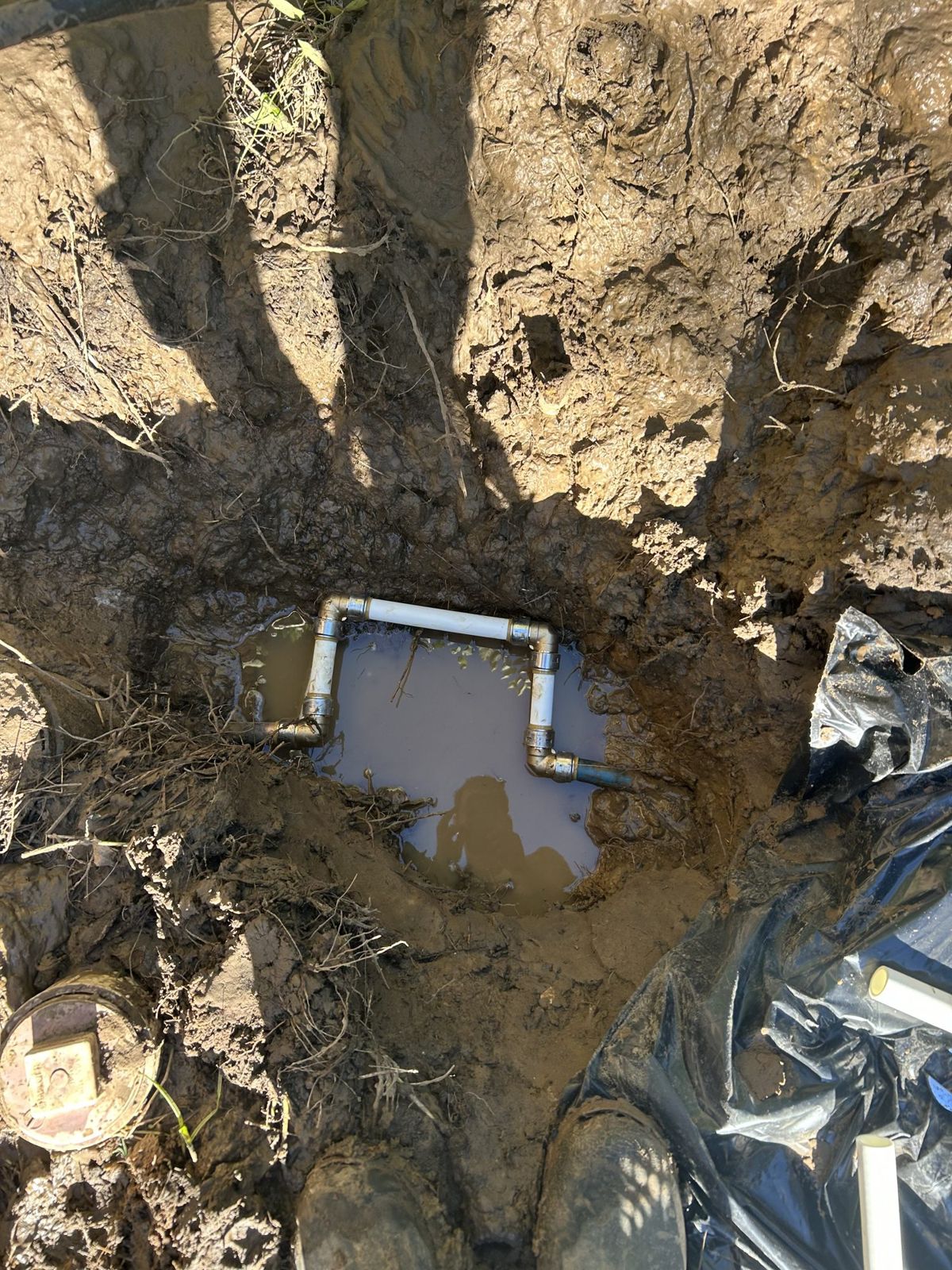
Your main water line, from the meter to the house
Your main water line, also called the service line, carries water from the meter to the house. Out here that run can be a short hop on a town lot or a few hundred feet across a pasture to a house set back from the road. It's buried, so most people don't think about it until something goes wrong.
In most places, the water supplier owns the meter and everything on the street side of it. The pipe on your side of the meter, running to the house, is usually the property owner's responsibility. That's true whether your water comes from a city or a rural water supply corporation. Rules vary a little from one water supplier to the next, so if the leak is right at the meter box, call them too and ask where their part ends.
Most homes also have a main shutoff where the line enters the house or near the meter. Know where yours is before you need it. When a city crew shut off one customer's water in Rockwall without notice because of a major leak, our crew came out, fixed it and got the water back on. On a call like that, knowing your line and your shutoff saves a lot of stress.
Signs of a water line leak in the yard
A water line leak in the yard can run for weeks before anyone notices, especially on bigger lots. Watch for these.
A soggy spot that won't dry out
A wet patch in dry weather, standing water, or a strip of grass greener than the rest along the path from the meter to the house is the most common sign.
Low water pressure all over the house
If every faucet and shower got weaker at the same time, the main line is a good place to look. Water escaping underground never makes it to the tap.
A water bill that doesn't make sense
Main line leaks run around the clock. A bill that jumps with no change in how you use water deserves a closer look.
The leak indicator on the meter keeps moving
With all the water in the house turned off, check the meter box. If the leak indicator is still spinning, water is leaving the line somewhere.
Cloudy or dirty water
A break in the line can pull dirt and grit into the water, especially after the water's been off. Cloudy or dirty water at every tap is worth a call.
Sinking ground, a lifted sidewalk or a wet driveway crack
Water washing out soil can make the ground settle. We've fixed leaks under sidewalks and inside a backyard brick column, so look around hard surfaces too.
Why water lines break around here
Buried water lines in this part of Texas take a beating. Knowing why yours failed helps us decide whether a repair will last or whether it's time for main water line replacement.
Clay soil that moves with the weather
Much of this area sits on Blackland Prairie clay soil, which shrinks when it dries and swells when it gets wet. During a long drought, the ground pulls apart and the pipe moves with it. Then the rain comes back and it moves again. Rigid PVC glue joints don't love that, and a weak joint will eventually pull apart or crack. We had a customer whose pipe burst behind her house during an extreme summer drought, and that's not unusual here. If yours just split open, our burst pipe repair page covers what to do first.
Old pipe material
Older homes may still have galvanized steel lines that rust from the inside, or gray polybutylene that gets brittle with age. Both fail more often the older they get.
Tree roots, traffic and shallow lines
Roots wrap around and crush lines. Trucks and tractors driving over a shallow line crack it. Lines that weren't buried deep enough are also more exposed when a hard freeze comes through.
Bad joints and fittings from the original install
A glue joint that wasn't primed, a fitting that was overtightened or a pipe laid on rocks can hold for years before letting go.
Water lines to shops, barns and acreage
A lot of properties around Lone Oak, Emory and Lake Tawakoni have more than one water line. There's the main line to the house, then branch lines to a shop, a barn, a stock tank float, a garden hose bib out by the fence or a second home on the same place. Those lines tend to be long, shallow and old, and nobody remembers exactly where they run.
We repair and replace these lines the same way as a main line: find the leak, dig only where we need to, fix it and pressure test it. If you have a branch line that leaks often, it's worth adding a shutoff valve where it splits off the main, so you can keep the house running while the outbuilding line waits for repair. We had a customer whose pipe burst in the paddock behind her house during a drought, and a separate shutoff on that run makes a mess like that a lot easier to handle.
If you're not sure where your lines run, tell us what you know when you call. Old survey drawings, the spot where the line leaves the meter and where it comes up at each building all help us trace it.
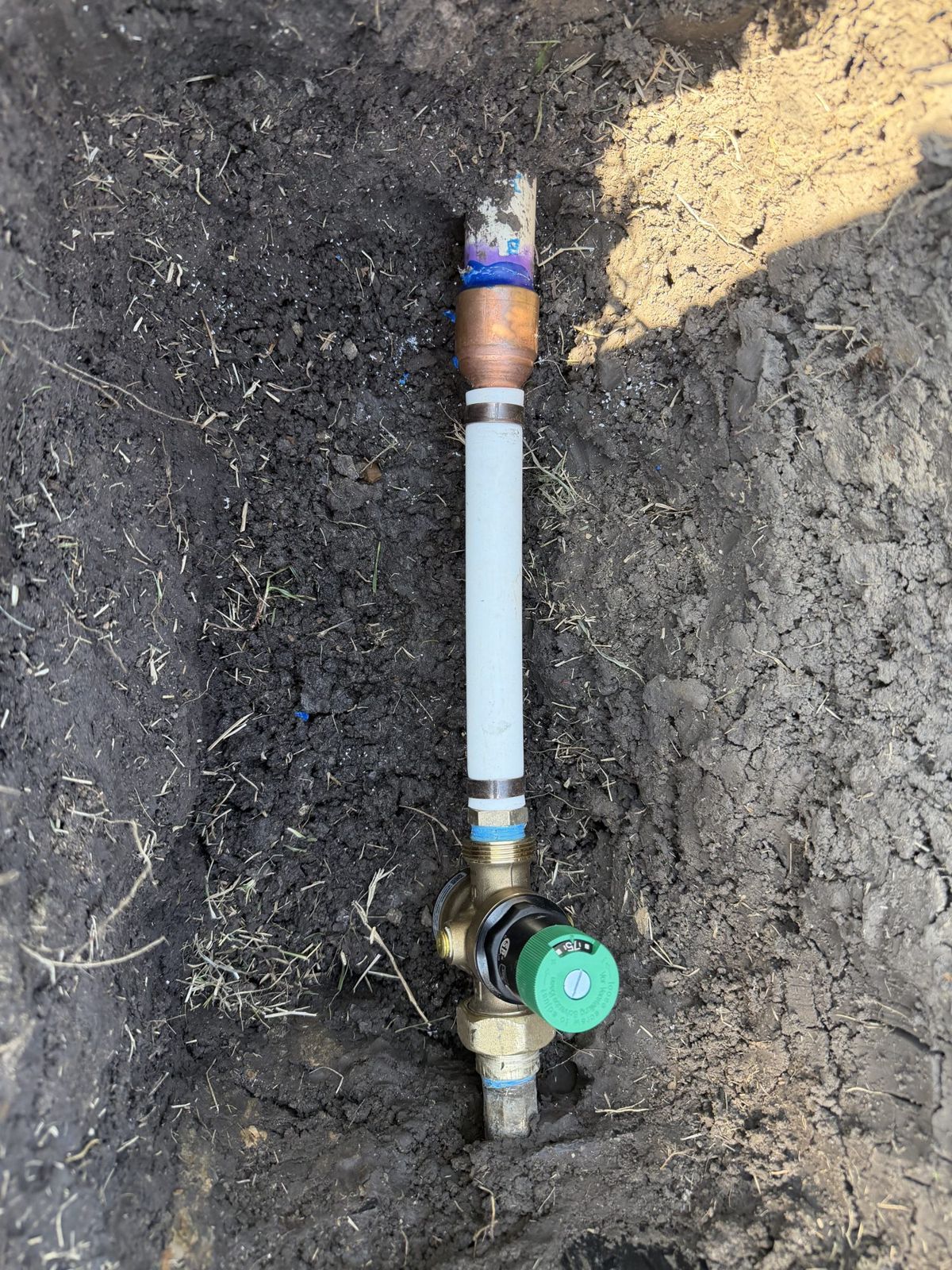
A new valve and water line in a trench.
How our water line repair works
Here's what main water line repair looks like when you call us. The goal is to keep the digging small and the repair solid.
Pinpoint the leak before digging
We confirm the leak at the meter, then trace the line and narrow down where it's leaking. That's the same process we use on all our water leak detection calls. A customer told us our precision cut down on the masonry repair he needed after we found a leak inside a brick column.
Dig a small hole over the leak
Once we know the spot, we dig a small hole down to the pipe instead of trenching the whole yard. We're careful around other buried lines, and we'll ask you about anything you know is in the ground, like sprinkler lines or electric to a shop.
Cut out the bad piece and repair it
We cut out the damaged section and splice in new pipe with new couplings that match or upgrade what's there. That's usually PVC with new couplings or a section of PEX. On some jobs we add a new shutoff valve while the line is open, so you have a way to cut the water off right there next time.
Pressure test before we bury it
We turn the water back on and run a pressure test to make sure the repair holds and there isn't a second leak somewhere else on the line.
Backfill and clean up
Once it checks out, we backfill the hole, pack it down and clean up. We'll show you what we found and what we did before we leave.
PVC, PEX and copper water line materials
Most of the service lines we work on are one of these three. We'll recommend what fits your yard, soil and budget, and explain why.
| Material | Where it works well | Things to know |
|---|---|---|
| PVC | Long straight runs on rural and town lots | Affordable and common. Glue joints are the weak spots when clay soil moves, so good joints and good bedding matter. |
| PEX | Repairs, runs with bends, and lines that need some flex | Flexible with fewer joints, so it handles some ground movement better. Should be protected from sunlight before it's buried. |
| Copper | Older homes and short runs near the house | Long track record, but costs more. Can corrode depending on soil and water conditions. |
Repair a section or replace the whole water line
Should you repair a section or replace the whole line? One leak on a line that's otherwise in good shape is a repair. We fix the spot and you move on. But when we keep finding problems on the same line, water line replacement starts to make more sense than paying for repair after repair.
Here's when we'll bring up replacing the whole line:
- You've had repeat leaks on the same line in the last few years.
- The line is galvanized steel or polybutylene.
- You still have low pressure even after the leak is fixed, which can mean buildup inside old pipe.
- The line is too shallow, runs under a spot where you're about to build, or was installed poorly.
We'll give you both options with the cost of each, and estimates are free. If the pipes inside the house are just as old as the main line, it may be worth looking at whole home repiping at the same time.
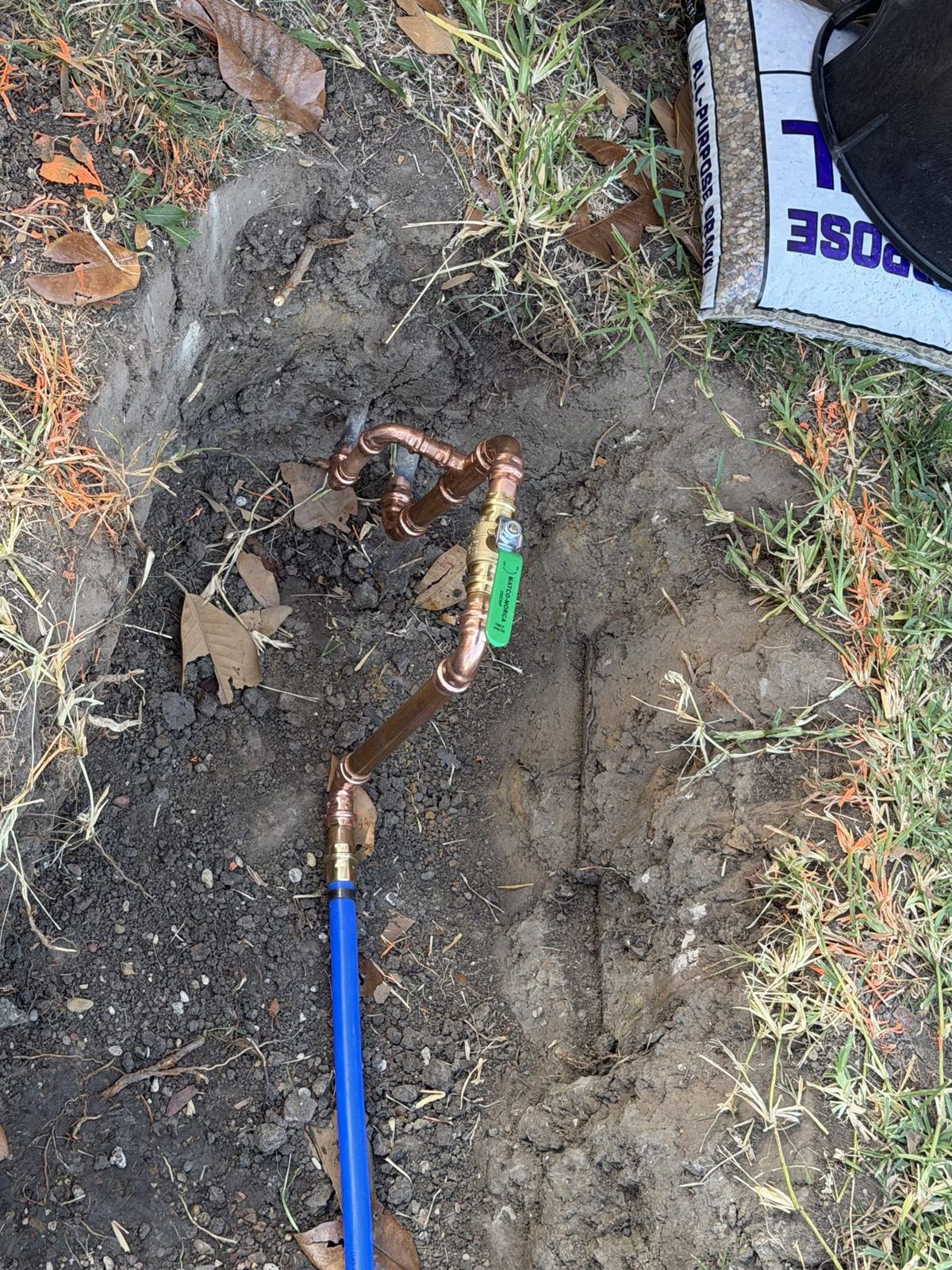
A water line repaired with PEX and a new shutoff valve.
Water line replacement: trenching and other options
For a full replacement on a longer run, we often use a trencher. It cuts a narrow, clean path for the new water line instead of a wide ditch, which means less torn-up yard and faster cleanup. The photo here shows a trencher cutting a path for a new water line through a wooded yard.
Trenchless methods, like pulling new pipe through the path of the old one, are something some plumbers offer when the line runs under a driveway, landscaping or other things you don't want dug up. Whether it fits depends on the old pipe and the ground. Our post on trenchless water line repair goes into how it works and when it makes sense.
With a new line, we also look at the shutoff valves. A good shutoff where the line enters the house, and a working curb stop at the meter, mean you can kill the water fast the next time something goes wrong.
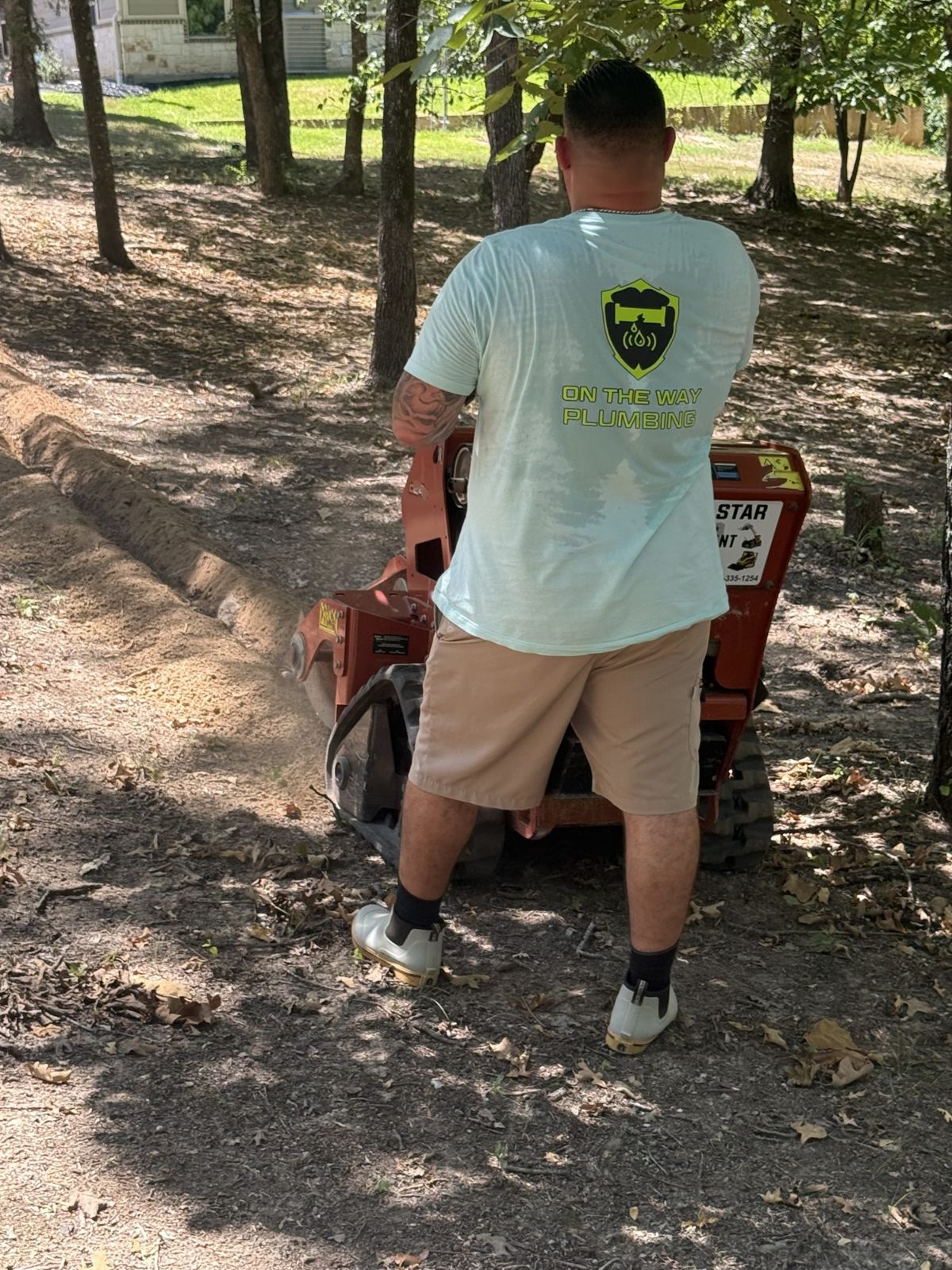
A trencher cutting a path for a new water line through a wooded yard.
What customers said about their water line repair
★★★★★
"Fixed the main waterline from the street to the house in no time at all!"
Nancy W. · Google review
★★★★★
"They were able to diagnose and repair a water leak in our backyard brick column. Their precision reduced the amount of repair masonry needed."
Brian S. · Google review
★★★★★
"I had water leak under the sidewalk and Bailey came and fixed it."
Jane N. · Google review
★★★★★
"The city of rockwall came and shut my water off without notice, Chad and jb came out and fixed my major water leak then turned our water back on!"
David B. · Google review
Water Line Repair and Replacement around Hunt and Rains counties
We handle water line repair and replacement for homes and businesses in Lone Oak and the towns around it, about a 60-mile radius from our shop. Pick your town below to see how we work there, or see all of our service areas.
Common questions
Wet spot in the yard or pressure dropping?
Call or text (903) 458-4026. Send us your address and a photo of the wet spot or the meter and we'll plan the repair.