
HomePlumbing ServicesBurst and Frozen Pipe Repair
Burst pipe repair in Lone Oak, TX
Burst Pipe Repair When Water Is Going Where It Shouldn't
A burst pipe can dump a lot of water fast, so the first job is shutting it off. Then call or text (903) 458-4026. We handle burst pipe repair in homes and businesses around Lone Oak and Hunt County, with plumbers on call 24/7 when it can't wait.
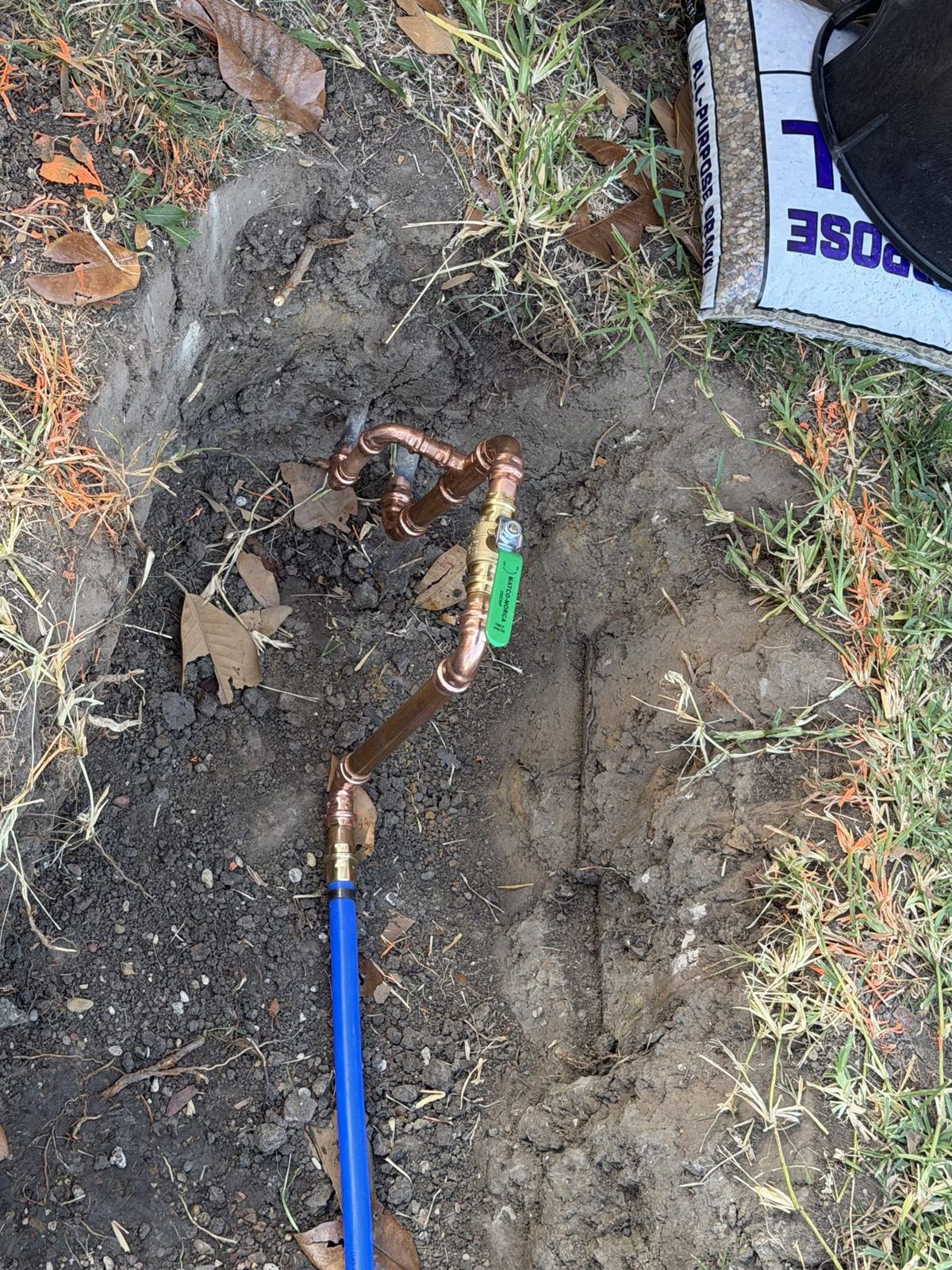
Pipe burst? Do these things right now
- Close the main shutoff. Find the main shutoff valve where the line enters the house, or the valve in the meter box, and turn it off.
- Shut down the water heater. Turn a gas unit to pilot or off. For an electric unit, flip the breaker off so the elements don't burn out if the tank drains.
- Keep away from wet outlets. If water is near outlets, cords or the electrical panel, turn off power to that area at the breaker if you can do it from a dry spot. If not, stay out of the water.
- Open a faucet. Open the lowest faucet in the house to drain what's left in the pipes and take pressure off the break.
- Move what you can and take photos. Get valuables out of the water and take pictures of the damage for insurance.
- Call or text (903) 458-4026. Tell us where the water is coming from and what you've shut off.
How to shut off water to your house
When you need to shut off water to your house in a hurry, you don't want to be hunting for the valve. Take five minutes this week and find yours. Here's where to look.
The main shutoff valve at the house
Most homes have a main shutoff valve where the water line comes into the house. Look in a garage near the water heater, on an outside wall facing the street, in a utility closet or in the crawlspace on pier and beam houses. A ball valve with a lever handle closes with a quarter turn, so the handle ends up crosswise to the pipe. An older gate valve with a round handle turns clockwise several times.
The curb stop in the meter box
If you can't find a house valve, or it won't close, the curb stop in the meter box near the road shuts off everything on your side. Some take a meter key or a big pair of pliers. On some systems that valve belongs to the water supplier, so use it in an emergency and let them know.
Fixture and appliance valves
If the leak is at a toilet, sink, dishwasher or washer, the small valves under or behind it (angle stops) let you shut off just that fixture. Old ones often stick or leak once you turn them. If your main valve is stuck, broken or missing, we can replace it. We replace ball valves on incoming lines, and a working main valve is one of the best upgrades you can make before something bursts. Our water line repair page covers valves out at the meter too.
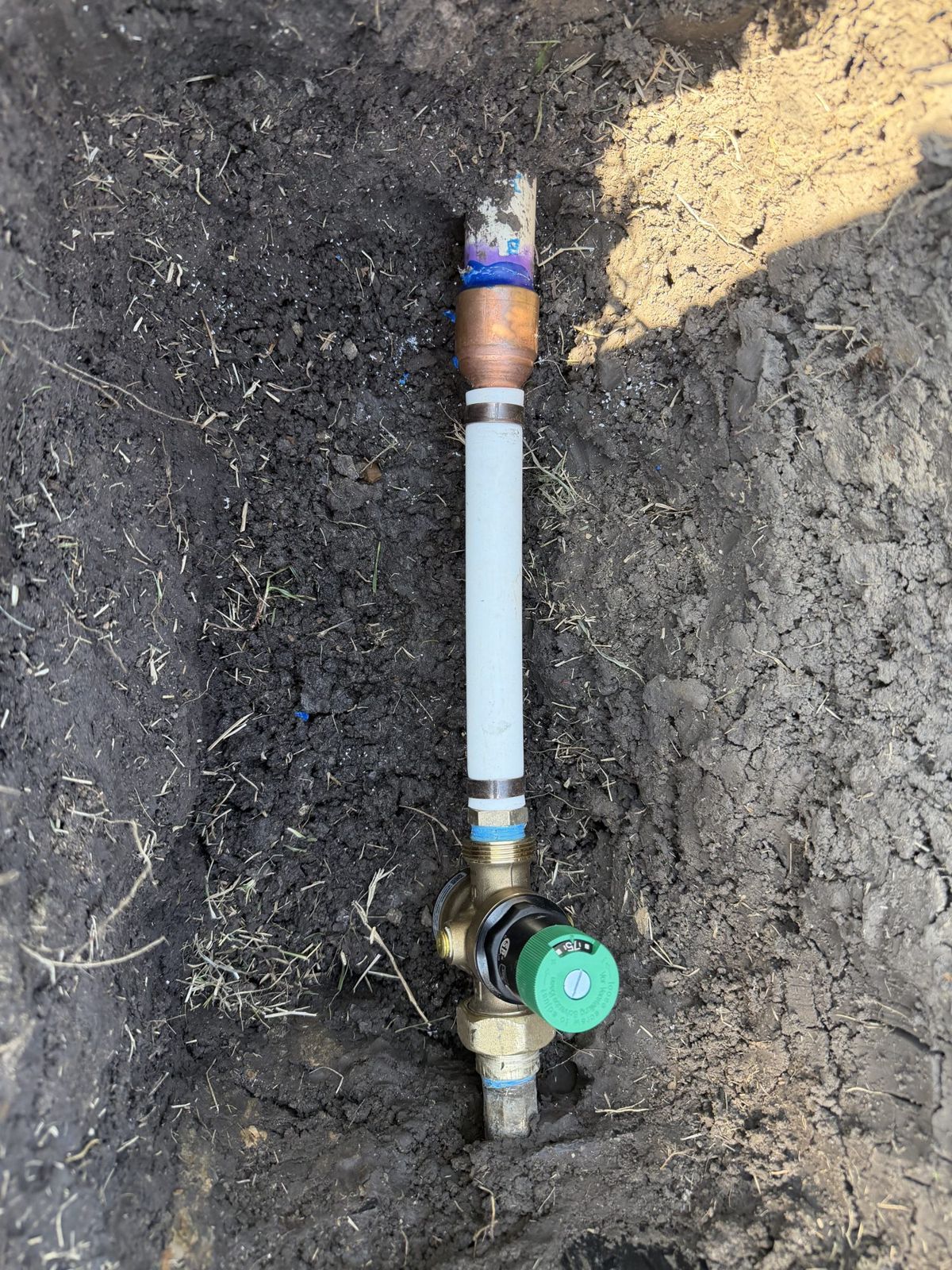
A new valve and water line in a trench, so the water can be shut off right where it's needed.
Why pipes burst in North Texas
Most people think of frozen pipes, and those happen here. But a burst pipe in this area is just as likely to come from heat, dry ground or too much pressure.
A hard freeze
Water expands as it freezes, and that pressure splits pipes in exterior walls, attics, crawlspaces and outside spigots. We don't get many hard freezes, which is why houses here often aren't built for them. See our tips on how to prevent frozen pipes in winter.
Drought and shifting clay soil
Clay soil shrinks a lot during a long dry spell. Buried lines move with it until a joint pulls apart or the pipe cracks. A customer of ours had a pipe burst in her paddock during an extreme summer drought.
High water pressure
Pressure that runs too high strains every pipe and connection in the house. We found 110 psi on one newer construction home. A pressure reducing valve brings it down to a safe level.
Corrosion and old pipe
Galvanized steel rusts from the inside and gray polybutylene gets brittle. Both are more likely to split as they age, especially when pressure spikes.
Physical damage
A nail through a supply line during a remodel, a lawnmower hitting a shallow line, or a twisted pipe under the house can all turn into a burst.
How our burst pipe repair works
A burst pipe is usually one break, but not always. Here's how we make sure the repair is complete and the water comes back on without surprises.
Confirm the water is off and find the break
We make sure the water is shut off and safe, then find the break. If it's hidden in a wall, ceiling or under the floor, we trace it so we only open what we need to.
Look at the pipe around it
We check the pipe on both sides of the break. If it's thin, corroded or brittle, a patch won't hold, and we'll tell you that up front.
Give you the cost and repair options
You'll know the cost before we start, with options when there are some: replace a short section, replace a longer run, or reroute a line that keeps giving you trouble.
Make the repair
We cut out the damaged piece and put in new pipe, usually matching what's there or switching to PEX where it makes sense. Copper, PVC and PEX all get the fittings meant for them.
Pressure test and turn the water back on
We turn the water back on slowly and run a pressure test. A freeze or a pressure spike can cause a second break you haven't found yet, and this is where it shows up. Then we check the water heater and fixtures and walk you through what we did.
Frozen pipe repair after a hard freeze
If no water comes out of a faucet during a freeze, you probably have a frozen pipe. The pipe may already be split and you just can't tell yet, because the ice is plugging the crack. Once it thaws, the leak starts.
What to do:
- Open the faucet the frozen line feeds so water can flow out as it thaws.
- Warm the pipe gently with a hair dryer, a space heater kept a safe distance away, or warm towels. Never use an open flame or a torch.
- Open cabinet doors under sinks on exterior walls to let warm air in.
- Watch closely as it thaws, and be ready to close the main shutoff if water starts spraying.
If you can't reach the pipe, or it's in an attic or exterior wall, call us for frozen pipe repair. Outside hose bibs are a common freeze casualty, and they're usually a quick fix. For freeze prep before the next cold snap, read our post on preventing frozen pipes.
Burst pipe in a wall, ceiling or under the house
Not every burst sprays water across the kitchen. Some happen out of sight, and the first sign is a stain, a sag or a sound.
A burst pipe in a wall shows up as wet drywall, paint bubbling, water at the baseboard or a hissing sound. A pipe in the ceiling or attic shows up as a brown stain, a sagging spot or water dripping from a light fixture. If you see a ceiling sag with water behind it, keep people out from under it and put a bucket down.
On pier and beam homes, a burst under the house in the crawlspace can soak the ground and the subfloor for days before anyone notices. Low pressure, a running sound under the floor or a wet smell coming up through the vents are the clues. On slab homes, a break under the concrete is a slab leak, and our slab leak repair page covers that.
We use the same process as our water leak detection work to track down hidden bursts, so we open as little drywall or flooring as we can.
Emergency pipe repair on nights and weekends
Pipes don't wait for business hours. Our office hours are Monday through Saturday from 7 AM to 11:30 PM and Sunday from 9 AM to 9 PM, and we keep plumbers on call 24/7 for emergencies. We offer same-day service whenever possible.
When you call, Erin or whoever answers will ask what's leaking, whether the water is off and where you are. If you can't get the water shut off, tell us right away and we'll talk you through it on the phone. Texting a photo of the break or the valve helps too.
We cover about a 60-mile radius around Lone Oak, including Hunt and Rains County. Our emergency plumbing page has more on what to expect when you call after hours.
After the repair: water damage, mold and insurance
Once the pipe is fixed, the next job is to dry out everything that got wet. Wet drywall, insulation, carpet pads and subfloors can start growing mold within a couple of days. Run fans, open windows if the weather allows and use a dehumidifier. For bigger floods, a water damage company can dry it out properly.
Most homeowners policies treat a sudden burst differently than a slow leak, so call your insurance company early. Your photos from before the cleanup matter, and so does an explanation of what broke. We'll show you the damaged section and explain what caused it so you can pass it along to the insurance adjuster.
If this is your second or third burst, or the pipe we cut out looked rough, ask us about whole home repiping. Replacing worn-out pipe once costs less over time than patching it every year.
Burst pipe calls we've handled
★★★★★
"During the extreme summer drought, I had a pipe burst in the paddock behind my house."
Liz · Google review
★★★★★
"Called OTW plumbing first thing in the morning with 2 leaking hose bibs... and a twisted water pipe leak under my home, they picked up on the first ring"
Liam F. · Google review
★★★★★
"Chad came out on Sunday for a leak in the ceiling... took pictures of before and after, and repaired it quickly."
Paul H. · Google review
★★★★★
"Took care of my leak in 107 degree temperature."
David K. · Google review
Burst and Frozen Pipe Repair around Hunt and Rains counties
We handle burst and frozen pipe repair for homes and businesses in Lone Oak and the towns around it, about a 60-mile radius from our shop. Pick your town below to see how we work there, or see all of our service areas.
Common questions
Got a burst pipe right now?
Shut off the water, then call or text (903) 458-4026. Tell us what broke and where, and we'll get a plumber headed your way.