
HomePlumbing ServicesSlab Leak Detection and Repair
Slab leak detection and repair
Slab Leak Repair and Detection Without Busting Up the Whole Floor
A slab leak is a water line leaking under your concrete foundation, and the longer it runs, the more it costs. We pinpoint the leak first, then talk you through slab leak repair options that fit your house: fixing the spot, rerouting the line or repiping. On The Way Plumbing serves homes around Lone Oak, Greenville and all of Hunt and Rains County.
What a slab leak is and why North Texas houses get them
Most houses around here sit on a concrete slab, and the water lines that feed the kitchen and bathrooms often run under the concrete or inside it. In a lot of homes those are copper lines, set in place when the slab was poured. When one of them springs a leak, the water has nowhere to go but into the soil under your house. That's a slab leak.
Hunt County and much of the area around it sits on Blackland Prairie clay soil. It shrinks and swells as it dries out and soaks up water, and that's a lot of movement under a house. A long dry summer followed by a wet spell shifts the ground, and the pipes under the slab move with it. Over the years that stress, plus rubbing against concrete and gravel, wears a pipe thin until it gives.
Other common causes:
- High water pressure. Pressure that runs too high pounds on every joint. We've found 110 psi on newer construction homes, which is far more than the plumbing should see. A pressure reducing valve brings it down.
- Corrosion. Water chemistry and age eat at metal pipe from the inside, leading to pinhole leaks.
- Install problems. Kinked or nicked pipe and bad joints from when the house was built can take years to fail.
- Foundation repair. Lifting or leveling a slab can stress lines underneath. We've found small leaks for customers right after foundation work.
Left alone, a slab leak wastes water, runs up the bill, soaks the soil under your foundation and can damage flooring. That's why slab leak repair is worth doing quickly once you know the leak is there.
Slab leak signs to watch for
People ask how you know if you have a slab leak, since you can't see the pipe. These are the signs we hear about most from customers before they call.
A warm spot on the floor
A hot water line leaking under the slab heats the concrete above it. Walk the house barefoot and feel for a spot on tile or bare concrete that's warmer than the rest.
The water heater runs all the time
If the hot side is leaking, the water heater keeps refilling and reheating. You may hear it firing or running more than usual, and you'll see it in the gas or electric bill.
Sound of running water with everything off
A hiss or trickle you can hear through the floor at night, when nothing is running, is a classic slab leak clue.
A water bill that keeps climbing
A slab leak runs 24 hours a day, so even a small one shows up on the bill. Check the meter test on our water leak detection page to confirm it.
Damp carpet, cupped wood or loose tile
Water wicking up through the slab soaks carpet pads, cups hardwood, swells baseboards and loosens tile, often in one area of the house.
New cracks and low pressure
Fresh cracks in flooring or walls, along with weaker water pressure, can point to a leak washing out soil under the foundation.
Think you have a slab leak? Do this first
- Do the meter test: turn off all water in the house and see if the leak indicator on the meter keeps spinning.
- If you feel a warm spot or the water heater won't stop running, close the cold water inlet valve on top of the water heater. If the meter stops, the leak is likely on the hot side.
- If the meter is still moving and water is showing up inside, close the main shutoff to the house until we get there.
- Take pictures of any wet flooring, stains or cracks. They help us, and they help with insurance.
- Call or text (903) 458-4026 and tell us what you found.
How slab leak detection works
Slab leak detection is about finding the exact spot under the concrete before anyone picks up a hammer. Every extra foot of slab we break is more work for you to pay for, so we take the time to get it right.
Confirm the leak
We start at the meter and confirm water is actually leaving the system. Then we rule out the easy stuff: running toilets, dripping hose bibs, fixtures and appliance lines.
Pressure test the hot side and cold side separately
We put gauges on the system and test the hot side and cold side on their own. A pressure gauge that drops tells us which side is leaking. Splitting it this way cuts the search area roughly in half right away.
Trace the line under the slab
Next we figure out the route that line takes under the house, from where it enters to the fixtures it feeds. That gives us a path to follow instead of the whole floor.
Listen and narrow it down
Water escaping a pressurized line under concrete makes noise. We listen along the route and narrow it down to the loudest point.
Mark the spot and explain your options
Once we've found it, we mark the spot, explain what we found and lay out the repair options with the cost for each. Nothing gets opened until you say go. For more on this stage, read our post on slab leak detection cost.
Slab leak repair options
There's more than one way to handle a slab leak, and the right one depends on your house: how old the pipe is, where the leak is, what's on top of the slab and whether this is the first leak or the third. We walk you through which fits your house, and you pick.
Spot repair through the slab
Reroute the line through the walls or attic
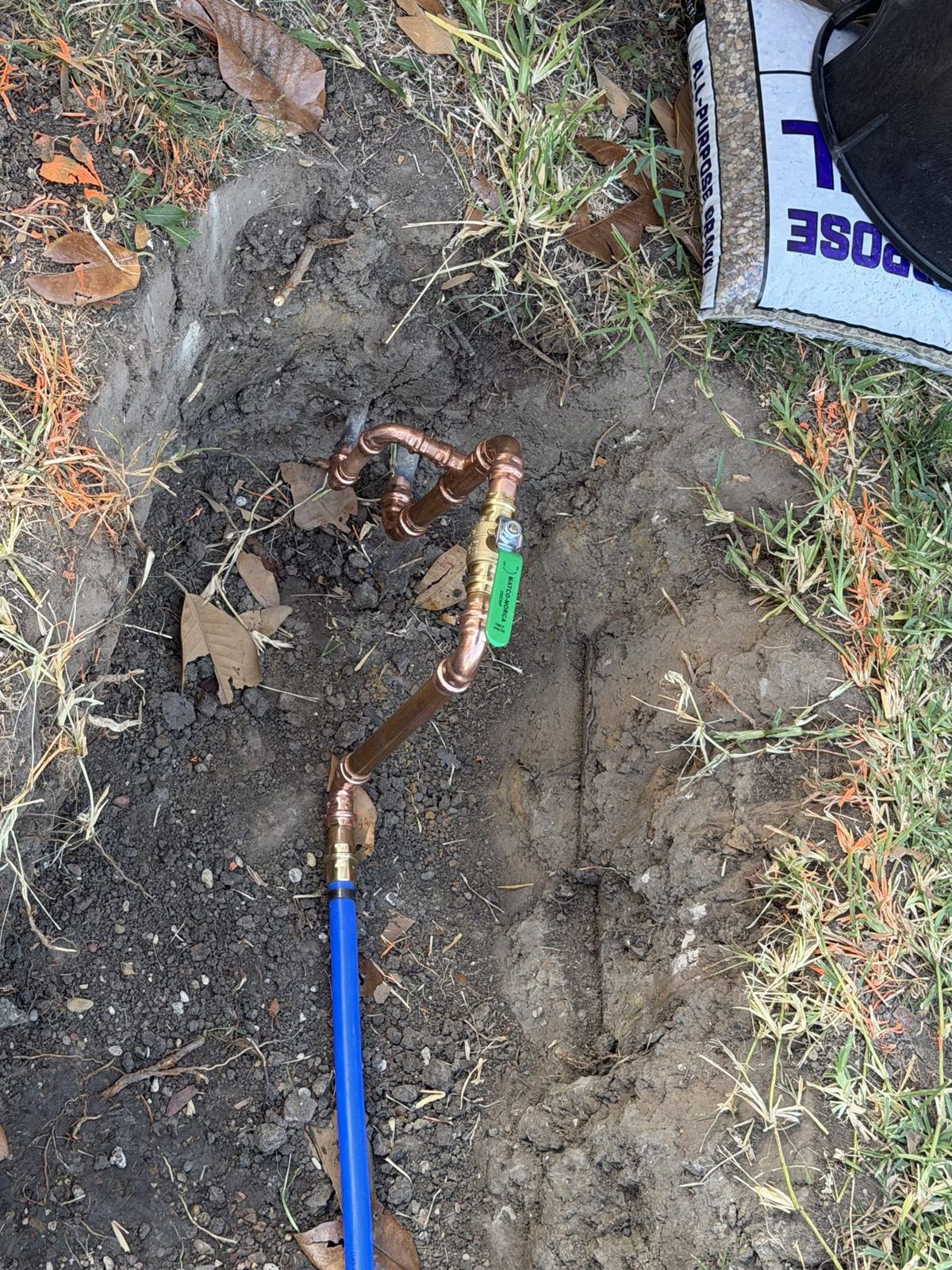
Instead of digging to the leak, we cap off the leaking line under the slab and run a new one above it, through the walls or through the attic. This is often the better choice when the leak sits under tile or cabinets, when it's hard to reach, or when the pipe under the slab is old and likely to leak again somewhere else. It usually means opening some drywall instead of concrete.
Repipe the house
If you've had more than one slab leak, or the pipe under your house is getting old, patching the newest leak only buys time until the next one. Replacing the supply lines with new pipe, often PEX run overhead, takes the slab out of the picture for good. See our whole home repiping page for how that works.
Comparing slab leak repair options side by side
Here's a quick look at how the three main slab leak repair options stack up. We go over all of this in person once we know where your leak is.
| Option | What we do | Good fit when | Things to weigh |
|---|---|---|---|
| Spot repair | Open the floor over the leak and fix the damaged pipe | One leak, pipe in decent shape, easy floor access | Breaks concrete and flooring in one spot; the rest of the old line stays in service |
| Reroute | Abandon the bad line and run a new one through walls or attic | Leak under tile, cabinets or hard-to-reach areas | Opens drywall instead of concrete; new line is easy to get to later |
| Repipe | Replace the supply lines in the house with new pipe | Repeat leaks or old, worn pipe throughout | Bigger job up front; ends the cycle of slab leaks |
What drives slab leak repair cost
We don't post flat prices for slab work because two slab leaks can be very different jobs. Here's what moves the number:
- Floor covering. Carpet pulls back and goes back down. Tile and hardwood take more care, and sometimes more replacement.
- Where the leak sits. Under a bathroom vanity or kitchen cabinets is harder to reach than in an open hallway.
- How deep the pipe is. Some lines are just under the concrete. Others run deeper in the fill.
- Which repair you choose. Spot repair, reroute and repipe are different amounts of labor and material.
- Pipe condition. If the pipe around the leak is thin or corroded, we may need to replace more than a short piece.
You'll get the cost before we start, with more than one option when there is one. We give free estimates on repairs, and if a bigger fix isn't in the budget right now, ask us about financing. For a deeper look, read our post on the cost of slab leak repair.
Slab leaks and homeowners insurance
A common question is whether homeowners insurance covers slab leaks. The general answer: it depends on your policy, and coverage is often split into pieces. Many policies cover sudden water damage to the house, and some cover the cost of breaking into the slab to reach the pipe and putting the floor back. The pipe repair itself is often not covered, and slow leaks that went on for a long time may be treated differently from a sudden break.
Read your policy or call your agent before you assume anything. If you file a claim, the insurance adjuster will want to see what happened. We can take photos of the damage and the leak as we work and explain what we found so you have it for your records.
Either way, don't wait on the insurance company to stop the leak. Water under a slab keeps soaking the soil and your floors every day it runs.
Customers on our slab and under the house leak work
★★★★★
"He was able to detect a small leak after we had foundation repair completed and gave us different options that would work best for us."
Ian & Michelle N. · Google review
★★★★★
"We had different plumbers out and the problem was not ever found. On The Way found the problem fast and was very reasonable on price."
Lenni L. · Google review
★★★★★
"The explained everything before so all questions got answered including cost so there was no hidden issue. They found several issues and gave several options on how to proceed."
Kyle S. · Google review
★★★★★
"Blake & Jayden were very good at taking all routes to evaluate a problem and explore the most cost effective solution first"
Shannon H. · Google review
Slab Leak Detection and Repair around Hunt and Rains counties
We handle slab leak detection and repair for homes and businesses in Lone Oak and the towns around it, about a 60-mile radius from our shop. Pick your town below to see how we work there, or see all of our service areas.
Common questions
Feel a warm spot or hear water under the floor?
Call or text (903) 458-4026. Tell us what you're noticing and we'll find the leak before anything gets broken.